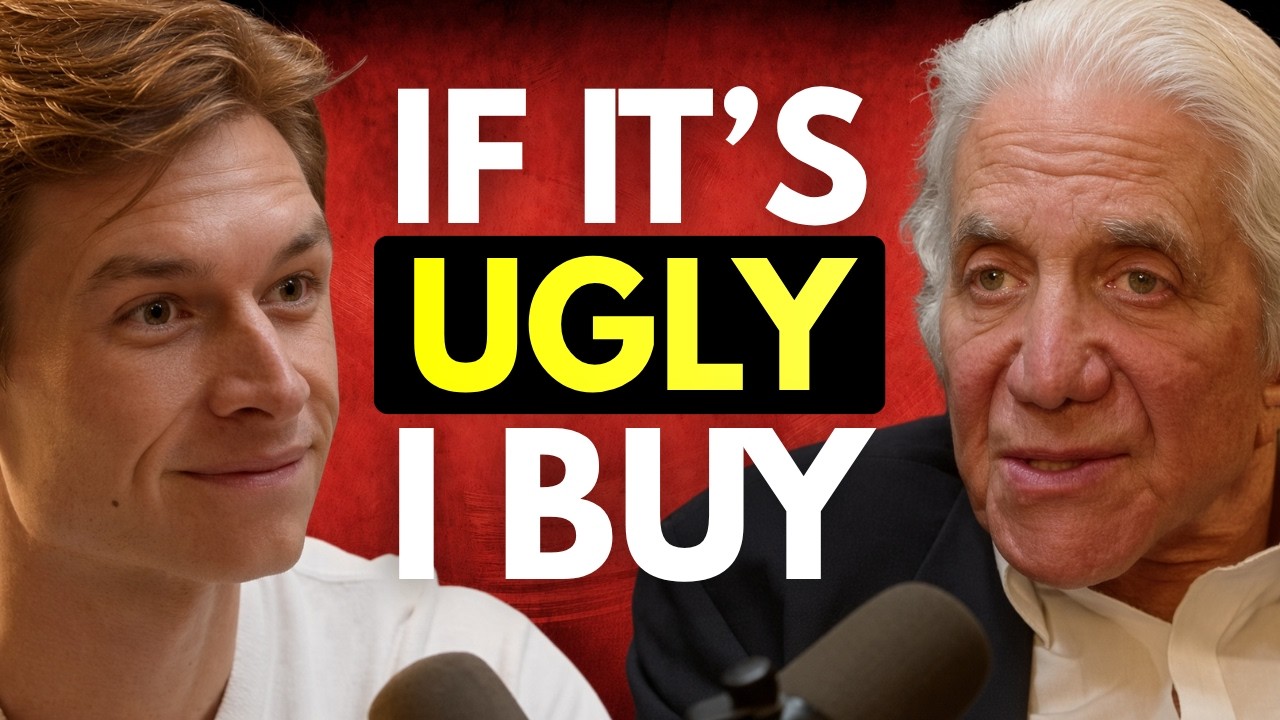
Professor Explains Why LA Real Estate Doesn’t Work
Eric Sussman on multifamily syndication, Los Angeles real estate, and Clear Capital. Taylor Avakian talks with the UCLA Anderson adjunct professor and founding partner of Clear Capital about Amber Capital, early syndications, and buying outside Los Angeles.
Show notes
Sussman walks through a path from Price Waterhouse to a Stanford MBA, then Amber Capital, Sequoia Real Estate Partners, and Clear Capital, plus how a CPA review class and David Ravetch led to teaching accounting and real estate at UCLA Anderson. The conversation covers the early-1990s deal market, Resolution Trust, a Palm Springs ground lease on Native American land, and raising capital in small checks from doctors before a track record existed.
Topics include cash-for-keys brick deals in Los Angeles, Washington Mutual and Hawthorne Savings, pref and waterfall structures, information asymmetry versus CoStar-era comps, and niches in multifamily, industrial, office, and retail. They also cover Miracle Terrace in Anaheim, Section 8, Loretta Sanchez, a bulk sale to Blackstone and CityView, Sun Belt supply, cap rates, and 2020-2023 syndications.
Later segments touch rent control, RSO, inclusionary zoning, housing policy in Los Angeles and New York, population and jobs, entertainment and aerospace, immigration, expert witness work, single-family versus multifamily, industrial vacancy, tariffs, and advice on networking, hard work, and pivoting. Joel Peterson, Trammell Crow, the Ziman Center, Rick Caruso, and Karen Bass come up along the way.
Chapters
- 0:00 Eric Sussman and Clear Capital
- 1:09 Career path from Price Waterhouse
- 1:41 Teaching at UCLA Anderson
- 5:13 First interest in real estate
- 7:04 Advice for a high school senior
- 9:25 First deal in the early 1990s
- 12:27 Asset types in the deal decade
- 14:41 How to pick a market and niche
- 16:42 Information and efficient markets
- 19:04 Postwar real estate versus today
- 23:25 Early LA syndications and structure
- 28:10 Miracle Terrace in Anaheim
- 33:41 Selling out of Los Angeles
- 36:50 Buying in LA now
- 38:03 Rent control and housing policy
- 42:00 Vacancy control and RSO risk
- 44:43 Population, jobs, and immigration
- 46:49 Call or put on Los Angeles
- 48:04 Getting back into the LA market
- 49:00 Education versus common sense
- 53:55 Expert witness work
- 56:10 Syndications from 2020 to 2023
- 59:50 Macro and real estate outlook
- 1:04:14 Cars, spending, and the game
- 1:08:42 Advice for the next generation
Episode transcript
Transcribed from the episode's automatic captions, so some names and terms may be spelled wrong. Speaker names were also added automatically and may be wrong in places.
Read the full transcript
0:00 to 10:00
Eric Sussman (0:00): Information is what makes markets efficient. If everyone has the same information, your ability to make money is significantly impaired.
Intro (0:07): Eric Sussman is a full-time professor at UCLA who has been involved in the acquisition, development, and management of more than $2 billion and nearly $2 million square ft of real estate.
Eric Sussman (0:16): There's no subject for hard work. Work life balance, Dad. It means a lot. I'm like, okay, I get it. But the more you work, the more balance you can afford. You know what I'm saying? I was a nobody. So, I had to make the economics attractive. When you're starting out and you have no track record, charisma accounts can get you pretty far. We sold out of LA in a bulk sale in 2017, you see this writing on the wall, the trend towards socialism and rent freezes and rent control on steroids. I saw that coming. We can agree that the Democrat's view on immigration open borders was not good. But you must be joking with ICE. It's like musical chairs where it stops nobody knows. I don't even know. I don't care how discouraged you are. You've got lost. You play the real sticking long enough and you don't have some losses. that you really haven't been playing games. What's one piece of advice? First of all, you can never ask a professor one piece of advice. I would say a couple things that always come to mind is let's go back to the beginning, right?
Eric Sussman (1:07): Because how far back you want to go to?
Taylor Avakian (1:11): Well, here's my career path notes from you. Price Waterhouse Cooper, then Stanford MBA, then Amber Capital, then Sequoia Real Estate Partners, then Clear Capital, which is the current iteration of of the
Taylor Avakian (1:23): the real estate side of it. Is that is that fair?
Eric Sussman (1:26): Yeah, it's fairly accurate. There's some crossover there. I mean, Amber Capital's still around, you know, like any real estate entity or, you know, sponsored vehicle, you have a bunch of lives and iterations.
Eric Sussman (1:36): Uh, but by and large, you you got most of it at least since college. Yeah.
Taylor Avakian (1:39): And then when did you become a professor?
Eric Sussman (1:43): Yeah. Well, that's a whole other story. It's it's a bit complicated. As I said, there's overlap. So, I joined the faculty in the fall of 95. Candidly, when I started Amber Capital in 9394, uh I didn't have money. I didn't come like, look, I know a lot of folks in this business come from a family of real estate. I didn't I'm not going to uh cry poverty. My father uh uh who I was very close to passed passed away last year. He was a doctor. So, I mean, you know, I grew up
Eric Sussman (2:10): Yeah. And so, you know, in Studio City. So, I I look, I I I grew up in in a family of, you know, upper middle class, whatever. But, uh no real estate. So anyways, when I started the firm Amber Capital, I didn't have money. I had about 53,000 in student debt from Stanford and I need some money. So I started teaching at nights and weekends. Honestly, I was teaching for what was then the largest CPA review course in California called Mark Doberman CPA Review. It's now part of Kaplan, I think, or whatever.
Eric Sussman (2:39): Uh and I was teaching uh nights and weekends. Uh so I start was doing the real estate stuff during the day. I then taught from 6:30 to 9:30 at night on Mondays through Thursdays, I think it was, and then 9:30 to 3:30 on Saturdays. And just for money, I mean, you know, and and then
Eric Sussman (2:58): look, uh, one thing I've learned is we all have sort of talents. I never forget some, you know, person comes up to me and he says, "Hey, Mr. Sussman, I wasn't a prof. Mr. Sussman, I got to tell you something. You're like the best accounting professor I've ever had. if I if you had been my teacher as an undergraduate, I might have actually liked accounting. And I said, "Well, you're studying for the CPA exam. I need a job." All right. Well, anyhow, uh and that's how it happened. I uh a professor at UCLA got wind of me and he I I saw him at a barbecue of all things and he just said, "His name is David Ravage. He's a well-known accounting person at UCLA." And he said, "Uh, hey, Eric, I hear you're like a really good accounting teacher." Because let's face accounting teachers usually boring.
Taylor Avakian (3:39): Usually suck. Yeah.
Eric Sussman (3:42): Oh, I just
Eric Sussman (3:42): I wasn't say my it wasn't my favorite class.
Taylor Avakian (3:44): Yeah. No, look,
Eric Sussman (3:46): I was a finance major, so it was the requirement to, you know, see it, you know, and that's unfortunate cuz I think every subject can be fun. But in any event, uh that's how it happened. And he he just approached me. He said, "Hey, Eric, I hear you're, you know, everyone talks about how you're really good teacher. Would you be interested in teaching a class for me in the fall at UCLA?" I was 27, I think, something like that. And I probably should have said no, but I said yes. And then it was the bamb to B to C to D. And I, you know, well, look, I I guess um teaching's been good to me.
Taylor Avakian (4:19): I was going to say that that's a little bit about real estate brokers for me, too. I I wanted to be a developer of all things, right? You know, bright brighteyed and bushy tailed 21-year-old. I'm going to be a developer. And you get you learn real quick, especially mostly from older people who've done development. They go, "Whoa, whoa, whoa. Slow down there. Slow down there, my guy." There's a lot that goes into it.
Taylor Avakian (4:38): Your generation's in a hurry. I get it.
Eric Sussman (4:41): You know, it is. It's Look, we're ambitious. I would say we're very ambitious and I'm actually still considered a millennial and I wear that very proudly. Um,
Eric Sussman (4:48): don't ask a whole,
Eric Sussman (4:53): but you know, it's it's in
Taylor Avakian (4:53): You never ask a woman or a real estate broker their age. I've I've heard that. So, you know,
Eric Sussman (4:58): well, you ask them when their photo is from 45 years ago, and you see them in person, you go.
Eric Sussman (5:03): Well, okay. That's
Eric Sussman (5:06): my head shot at UCLA, I think, are kind of old. I I I feel I'm not sure I probably should change those.
Taylor Avakian (5:12): Yeah, it's okay. It's all right. So, then walk me through what drew you to real estate and like what was Walk me through the first deal, I guess.
Eric Sussman (5:19): Well, all right. I mean, that's the several parts there. because I didn't come from a real estate background. As I said, as and as you captured, I was uh I was an accounting person. I I went to go uh work at Price Waterhouse after my undergrad at UCLA. But like a lot of people working in accounting realized that was not my cup of tea. Went back to business school. Look, a lot of people go out to business school to pivot is the word that people use to seek another uh direction in in life. Actually, it was uh a real estate professor, Joel Peterson, who was the former CEO of Traml Crowe and who was my real estate professor. He had he I'm not sure he retired, but he was became professor lecture or whatever at Stanford. And he approached me after class one day. Well, he I it was I mean it was before class. He said, "Eric, can you can you come see me after class?"
Eric Sussman (6:06): And I'm like, "Oh what did I do?" You know, like you know, and he and he told me I I still remember very nice. He said, "Well, you know, he he flattered me. He said, "Eric, I think you're like the top student in the class, and have you considered a career in real estate?" And I said, "No." And then, of course, the real reason he was bugging me, he wanted me to head the NAOP team in the case competition against Cal.
Eric Sussman (6:26): Uh we kicked their backsides, but um and anyways, it was that's what led the change. So really, it was uh Professor Peterson. I think he's still uh out there. Um he's I think he retired from Stanford now, but um anyway, so a teacher
Eric Sussman (6:42): and that's why I tell my kids, I tell all of anyone young out there who's still in school, get to know your professors. I mean, I get it. You don't want to go see your props. They're boring and whatever.
Eric Sussman (6:54): I'm telling you, I'm not sure that song from Sesame. Kids are people, too. Professors are people, too. We like to get to know you, most of us, and we have good connections. And uh anyhow, enough of all that.
Eric Sussman (7:04): I will tell you something. So, I I had a high school senior come into my office yesterday and he sat down with me and he his family's in real estate, but he wanted to come and chat with me about my career and some advice and and things and he's looking at trying to do some multif family deals with him and his family a little bit and he just wanted to ask me some advice and he has this school that he wants to get into. He's starting his senior year of high school and I think he has a pretty strong chance of getting in there. And he asked me, he goes, "So, like, if you were my age, if you were 17, what's one piece of advice that you would give me over the next couple years that if I wanted to do real estate would be a, you know, good advice?" And I told him,
Taylor Avakian (7:44): "Yeah, what the hell do you tell them?" The one thing, this is like curly and city slickers. The one thing in life, what did you tell them?
Eric Sussman (7:51): I tell I'll tell you exactly what I told him. said, "You are about to go to a school that has very well-connected people." And the one thing that I wish I had done better looking back is is networking and making a network of friends. And there's so many things that if you pull the string of what's happened in my life have come from relationships and really trying to add value to people's lives. I said, "Go out there, meet everyone you can." You know, sometimes sk the skip the 8 a.m. if you got to go to a certain thing. The whole goal, in my opinion, of college, one is to to yes, learn what you're passionate about and find that thing that lights that fire inside of you really, but it's also to meet those type of people who you're growing up in this life, in this world with those people.
Eric Sussman (8:37): And they're going to be doing different things. Some of them are going to have different opportunities, starting on third base, second base, whatever it is. Like if you're a good person and you can add value to them,
Eric Sussman (8:47): um that network is incredible, invaluable really.
Taylor Avakian (8:51): I'd argue with you, but I agree.
Eric Sussman (8:55): You know, I mean, you look, undergrad is different than graduate school. Undergrad, you know, look, you're you're the first time you're away from home. There's a lot of moving parts. So, I look I maybe I look look at networking a little bit different than if you're at business school or law school where I think if you're not networking, you're a Um and that would include your faculty.
Taylor Avakian (9:14): Yeah. Yeah, exactly. And professors and things like that.
Taylor Avakian (9:16): Hey, you know,
Taylor Avakian (9:18): some some of them have done some pretty incredible stuff. So, okay. So, walk me through the first deal.
Eric Sussman (9:22): Oh, yeah. You Yeah, the first deal. Well, you know, look, I think part of my first deal was a was uh part of the time. This is where when you get into real estate or frankly any profession might dictate what happens. So, I mean, I got in the early 90s, which was the tail end of the RTC days. I mean there's plenty of course I don't know who's going to listen to this want hear me talk but you know if you got a little gray hair you remember the RTC days resolution trust which really followed the banking crisis of the late ' 80s anyhow so it was very different the '9s were what I would call a deal decade you could be you didn't have to be um you could be sort of asset type agnostic there were so many deals because there was so much distress at least in the early part of that decade so my first deal of all things was a very odd odd, very odd deal.
10:00 to 20:00
Eric Sussman (10:08): It was right down my alley for someone with, you know, my background. It was uh a s of all things, and I have to maybe explain this. It was called a sandwich lease project out in uh Palm Springs. It was on Native American land. It was a condo project. And so you were buying into the ground lease basically essentially. And what was it was just unique I I I won't bore you with the details. I ended up flipping that thing. I was in escrow to buy it. It was just a interesting project, an opportunity. I got a call maybe a week or two before escrow was going to close from the Bureau of Indian Affairs who I'd never heard of in my life.
Eric Sussman (10:53): Didn't know they existed up DC. And a person, I still remember this guy says to me, "Uh, hey, you're in escrow to buy this ground lease, you know, in the desert, which we we'd like to buy it." The Indians wanted to buy it back, the BIA. I I never forget. So, I was what 27, how old was I? Geez, I'm in my mid late 20s. And I said to the person, I said, "Well, I don't think you can afford it." I don't even know where that came from. I remember. And he says, "Well, how do I know you?" Well, I said, "Offer me something." And I'll just tell you, they made me an offer that I couldn't refuse. Wow.
Eric Sussman (11:27): And I I double escroed. I I took title. I immediately uh transferred over to the BIA. That was my first deal. And that I I
Eric Sussman (11:36): that launched the rest everything else.
Taylor Avakian (11:39): Do you remember how much money you made?
Eric Sussman (11:39): I'm not going to talk about it, but it was more than I had seen at that point of my life obviously. And yeah, I was able to pay off my student debt and it launched Amber Capital. Really? Um the other thing that I did, I had started to raise capital for it uh in whopping $25,000 increments. I remember and my speaking of my father who was a doctor. He introduced God bless him. He introduced me to every doctor in the valley when actually doctors had money
Eric Sussman (12:04): and um I had some commitments from some folks and even though I never took their money, I still gave them their share of the profits. Uh I was not legally obligated to do that but I felt it was they had committed to me and I wanted to get make a
Eric Sussman (12:21): reputation and all those people stayed with me for uh for years as investors.
Taylor Avakian (12:26): Wow.
Eric Sussman (12:26): So that's what happened. Um, and the only thing is in the '90s I did everything. I did I did a bunch of retail. I did office. I did apartment my first apartment deal in '95. This is one of the coolest partnerships that I've done because this is an idea that I had and they had already created it. So, I said, you know what? Let's partner and do it together and have sponsored the podcast. 90% of the Fortune 500 insure through a captive. So, do the largest apartment owners in the country. Here's how it works. Owners hold equity in their own insurance company, buy reinsurance at bulker rates, and keep the unused premium when losses come in low instead of handing it off to a carrier. Rates drop up to 30 to 35% with dividends on top. So until now, that was closed to the giants. Real Property Captive opens it to owners with portfolios from 100 million to $3 billion.
Eric Sussman (13:12): And they're middle market owners themselves building this for their peers. Build for owners by owners. Go to rpcaptive.com. That's rpcapive.com.
Taylor Avakian (13:25): How'd you learn all those different verticals? Because I've been told, and this is I don't know if this is per the times or if it's just
Taylor Avakian (13:31): it's the times, Taylor, it's the times
Eric Sussman (13:31): because everyone says specialize. Correct. That's the difference. As I said, that's why I told you the '9s was the deal decade. It really didn't matter. You have to realize the 10-year Treasury was probably eight or nine back then.
Eric Sussman (13:46): Wa. So, you know, part of it was the rising tide lift lifting all the boats, you could have been a, you know, a and I I may qualify there. Uh, but because if you bought anything, the everything was a basis play pretty much.
Eric Sussman (14:02): No one was building anything because of the crisis and the banks were still sort of getting their balance sheets back in order. So it almost didn't matter what you bought because there were basis plays coupled with cap rate compression not like what we saw you know continue but you know yeah you saw sort of as that happened and of course you know you buy something at in those days I'm not kidding I mean I saw 10 11 cap deals let's just say on real income no BS
Eric Sussman (14:26): and then cap rates were compressing and then you know you just couldn't help but make money so people were deal I flipped everything mostly things but then starting in 2000 really focused on multif family.
Taylor Avakian (14:40): Okay. So, was there a shift in what you saw in terms of the actual market? Like the reason I asked this and I I want to get your opinion on how to spot trends slash pick a discipline because I have some friends and you know we're at this stage I'm 30 years old where we're making money and there's a lot of opportunities. I have a friend right now who I know LA multif family like the back of my hand. This is what I do. I sell apartment buildings here.
Eric Sussman (15:04): I see your stuff on LinkedIn. Taylor, you don't need to sell me. It's Taylor and everyone Taylor family in LA. I earned my keep in the app. You're welcome. Yeah, of course.
Taylor Avakian (15:15): So, but he's an industrial broker and he does tenant rep leasing and I've been telling him like he understands how hard it is to manage and own in Los Angeles and the regulations. And so, he's looking at deals in Florida. This morning he was texting me about a deal that he's working on in Tampa. And and basically, I'm like, look, I know Los Angeles like the back of my hand. I don't know Tampa, but I know how to study a market. But also, it's like how do you know what to go into? What discipline? Where's the where's the opportunity?
Eric Sussman (15:44): Yeah. I mean, that is the million billion trillion dollar question. I look these are different times. Uh I I can bore you with all the details.
Taylor Avakian (15:52): No, I want to know.
Eric Sussman (15:54): Okay. Look, you have working again backwards. The way my brain works is unlike I was the deal decade. You could be asset type, even maybe geographic agnostic. It didn't matter, as I said, because there were basis plays. Banks were unloading stuff, whatever the RTC was doing both in the early 90s and even into maybe the maybe 94, '95, I'd have to go back and think about it, but and cap rates were compressing, yields were coming down. So again, it did not matter. Uh there was no internet. You have to understand, there was no internet. owners didn't know what they had. Um, whatever you think about loss to lease, whatever the in place rents are versus the market, a lot of sellers and even brokers didn't know it was doortodoor, co-star, you know, what do you co-star, co-ar
Eric Sussman (16:42): So, as I tell students or anyone who really wants to understand markets, okay, information is what makes markets efficient. information asymmetry. The information that's known by a buyer, a seller, a tenant broker, a a seller broker, whatever. If everyone has the same information, your ability to make money is significantly impaired. All right, that's what's happened in real estate. You've got technology. Owners know what they have. Brokers know the rents. They know the comps. They know what where things are are. And so, you don't have that information advantage anymore. someone like me who was always a wonk and academic sort of person.
Eric Sussman (17:24): I took advantage of that bigly in the sort of I'd say mid 90s until I'd say maybe 2005 because that's really I'm not sure exactly when everyone started having all this access to information. So today you got to be super nichy. It's in the niches and even when you say well I'm an I'm a multifamily person. and I'm a industrial office retail industrial self storage whatever it is you have to even get more nichy that's on geography maybe asset type um and that makes things more challenging
Taylor Avakian (17:57): and what does that nichy skill set give you in today's market so is there still that information asymmetry or what what is that
Eric Sussman (18:06): less but less of it so the more that's you again I I can't get down to granular details because it may even depend on certain markets and geographies but right wherever ever you feel like you've got an information edge, that's the niche
Eric Sussman (18:19): and that's the opportunity because otherwise you're basically banking on macroeconomics, what we call, you know, market risk, which everyone can do.
Taylor Avakian (18:27): You ask me where the 10-year Treasury is going to be tomorrow or next week,
Eric Sussman (18:32): you know. Okay. I mean, you know, I'm speculating. I can look at the forward curves like anybody else, okay? And again, information is out there. You can look at the futures market. That's the best bet. How do you make money in that situation? It's much tougher. It's much tougher now. And look, Taylor, there's one thing that we all have to understand. And
Eric Sussman (18:51): part of me says I I think I emailed you that maybe I'm becoming the middle-aged kermagin, you know, hey kid, get off my damn lawn kind of personality
Eric Sussman (18:58): is um if you think about macro trends, there's a picture outside of the Zimman Center of Real Estate at UCLA, which I love. Well, actually, it's on the floor above. It's an aerial photo of Westwood from, let's say, 1930 or something. It's empty. You can see the four buildings at UCLA, the main quad there, and then you look around and it's it's nothing.
Eric Sussman (19:23): So, again, stop and think about real estate west of the Mississippi after World War II. It was an open field, manifest destiny. Everyone's moving west. So, so much wealth was created. John Anderson the Anderson school namesake real estate he bought he had no strategy
Eric Sussman (19:44): if you know John Anderson's portfolio TOPA a ton of retail and lowrise retail he owns a lot of west but office auto dealerships he owned a few multif family it was a his portfolio topa hodge podge he made bank because he just bought and bought and bought at the right time today you know it's a different ball game. Um, and so you you know LA, we we will talk about LA and all the challenges.
20:00 to 30:00
Eric Sussman (20:15): Just stop and think you bought real estate in LA in 1950. God bless you if you didn't sell it. You made I think the academic word we use is bank. I think um you know and you could have been a
Taylor Avakian (20:28): Yeah.
Taylor Avakian (20:28): Those days are maybe gone and you know so the question is what's what's next, right? This episode is sponsored by Loan Titan, a leading residential financing loan company specializing in both conforming and non-conforming mortgage solutions. Loan Titan offers Fanny May, Freddy Mack, nonQM, and private money, hard money loan programs, helping borrowers who need flexibility beyond traditional lending guidelines, or speeddriven financing solutions. Whether you're purchasing, refinancing, or investing, Loan Titan is known for smart structuring, clear communication, and reliable execution. Visit loanitan.com and mention Taylor Avakian to get started. Thanks for Loan Titan for supporting the channel. You know when the young people are like, we complain about, man, the opportunities are not what like what they once were.
Taylor Avakian (21:16): You see these old guys and and they have these portfolios and you're like, if only the time was like that. And I have a feeling and this is just my personal there's always that thing whenever your generation is and I think for us it's actually AI
Eric Sussman (21:30): correct you know
Eric Sussman (21:30): you're Taylor you are right there always is an opportunity every generation has it the problem is you know what does it look like can you take advantage of it where do you need to be geographically right I mean data centers AI of course now I mean I don't play in the data center field I don't
Eric Sussman (21:45): if you asked me what are the economics of a data center I couldn't really tell you I know water and electricity You're a big part of it. You know, the Nimbies are driving us crazy. Okay. Okay. It's not my sandbox, so I I don't really
Taylor Avakian (21:56): Where do you think if you were Let's I'm going to put put the question.
Taylor Avakian (22:02): We're starting over. Where would I do?
Eric Sussman (22:05): Well, you should visit my Only Fans page. Um, that's what I joke. Maybe that's and and you know, I joke I am a joker.
Taylor Avakian (22:12): Yeah.
Eric Sussman (22:12): I think young people have to be super entrepreneurial. I may not directly answer your question, but I I think the days of Okay. Well, maybe if you work for a big brokerage firm and you set your career there and all that, you know, that's fine and you can and if you're good at it, you can have a very successful career at any number of the big big firms. Uh, but I think for a lot of people, you got to be entrepreneurial. You're going to see startups, people doing their own thing, and that's the one thing that technology does offer, right? You can set up your own business, Shopify or whatever it is, and and and work out of your condo and maybe, you know, as I joke about Only Fans, I mean, you know, look, I'm a liberal. fine, right? That you know, people are doing that stuff. I you got to do what you have to do. I'm not saying I endorse it, but it's a reality. So, you got to be niche. You got to be more entrepreneurial uh and flexible, and I agree with you that, but it's hard for me as a maybe a, you know, middle-aged dude to sort of say, okay, what does that look like now?
Taylor Avakian (23:09): Because AI to me, I'm still learning it and trying to figure out how it's going to affect my classes, let alone real estate for God's sake.
Eric Sussman (23:16): Yeah. It's going to change a lot of things.
Taylor Avakian (23:18): You're not kidding, man.
Taylor Avakian (23:19): I want to talk about some nitty-gritty stuff cuz this is what I nerd out about and what I love to learn from.
Taylor Avakian (23:23): And I talked to a few people who know you. Um, and I won't name names, but what they said is you were like the OG syndicator in LA at a certain point. And you had done a lot of this, like you said, you were a deal junkie doing a lot of stuff. At a certain point, you left Los Angeles and and started buying out of state. But I I wanted to to talk through those early days of like one, how did you structure the syndications, the capital raising? Was it a certain prep return that you were going to do? Was it like how did you figure out the economics of those deals? And what did that actually look like then? And then what do you think it would look like or should look like today?
Eric Sussman (24:03): Well, I I uh being referred to as an OG syndicator. I don't know.
Taylor Avakian (24:08): In Los Angeles.
Eric Sussman (24:11): Yeah. No. Well, I think there's some truth to it. Look, my partner, one of my partners, Greg Warell and I, we were one of the very, very early birds, perhaps one of the very first to do sort of cash for keys brickers in LA. We must have bought 30
Eric Sussman (24:24): brickers in LA in days that the only lenders out there were WAMU and Hawthorne Savings. I swear to God, when we were doing the deals in the 90s and I think that was it, it was Hawthorne Savings, wherever they are now. And it was wamu, you know, of course, which is also gone. Yeah. Washington Mutual now, you know, bought out, you know, going through their problems, which was the lucky winner for them. JP Morgan or whoever bought them. Anyhow, given my background and my academic bent
Eric Sussman (24:54): and all that, it was perfect. And we we did we I mean, I think our IRS were 35% I across the board for 15 years. It was nuts. uh but I didn't have a source of capital so I was doing accredited uh capital raises knocking on a lot of doors a lot of doctors as I said you know thank you dad
Eric Sussman (25:13): as far as the syndicate the structure that's a great question because the first two deals that I did I didn't take any uh uh carry again I was a nobody I had no track record whatsoever and I had to make the economics I tell my students this I had to make the economics attractive when you're starting out and you have no track record your human capital and your intellig ence, your charisma. I mean, killer, I know you're you're doing you've got you've got a lot of those. Thank you. Thank you. I I knew who you were before you bugged me.
Eric Sussman (25:41): Um, and that says something. No, my compliments. That's that's really super important. Now, some people do it naturally, some not. All right, that counts. Charisma counts. It can get you pretty far. I just took fees. So, I worked for uh management fees, and I'm trying to remember what I charged back then. It was like an asset management fee. And it was enough that I felt I was getting fairly compensated, but I didn't have carry, which really sucked because those deals were home runs and all that, but I bought goodwill with investors and A to B to C. And then after that, uh, the structure we started doing, you know, your, you know, your your waterfall, I think it what the hell we were offering was, I think it was really simple. I think it was an eight prep. I can't remember if we gave return of capital and then 7525. It was very simple waterfall structure. And look then we got into you know as rates started falling we lowered the pref to a six and then we had sort of tears of course uh over
Eric Sussman (26:34): yeah 8020 to this 7030 and then 60 I think we got to 60 40 at a 15% or something like that whatever your look backs are. Um
Eric Sussman (26:45): today look we're we're not doing deals right now. It's I I don't think we're alone in that category. We've got our challenges in certain assets. We're not alone.
Eric Sussman (26:59): It's a it's a very different time. Um I think that it's a really interesting question. If I had a deal and I had to attract capital, I guess it depends on the deal. If it was really a smoker, look,
Taylor Avakian (27:11): yeah,
Taylor Avakian (27:11): isn't it deal dependent on
Eric Sussman (27:12): it is it is dependent. I think that's right. So you got to attract the capital and I would tell any student or anybody is look what's the market require and and if you've got a whale who's willing to fund most of it you know give them a sweetheart deal you got to raise the money so you know no deal no capital no deal
Taylor Avakian (27:30): so whatever structure makes sense you can get the money to get
Eric Sussman (27:33): and look look when you're starting out it's okay to leave more on the table it's okay to give your you should you may have to uh maybe not I I felt like I needed to do that and I have no regrets about it other than you know I well I have some regrets but you know hey you know
Taylor Avakian (27:50): do you remember the first deal that you did with with Clear where you guys hit it out of the park and maybe it could even been a catalyst deal and I'm this is a leading question because I have a deal in mind that I've been told about um and I want to know if it's the same deal that you would call like the home run of home runs.
Eric Sussman (28:10): Yeah. Now, the biggest home run we did, it's not even a it's not even a close call for us, I think, was Miracle Terrace in Anaheim. Uh, that was a home run.
Taylor Avakian (28:19): Walk me through that.
Eric Sussman (28:21): That was a very unusual I mean, again, oneoff. This is not a shampoo strategy kind of deal. You can't wash, rinse, repeat this one. It was a one-off deal. It was in Anaheim, sort of in more the sort of, you know, not Disneyland, Anaheim, more the sort of workforce housing, bluecollar area of Anaheim. The property was owned by a Korean church of all things. It was actually next door to a Korean church. So they owned the church. They owned this apartment building. It's 179 units. Uh it was age restricted. I as I recall it had an age restriction on there and it was all Korean tenants that were happen to be members of this church. And the church basically it was subsidized housing. I think the in place rents, don't quote me now, were like, this is OC, were 500 bucks a month.
Eric Sussman (29:10): No, I mean, I don't care what this was not a class A property or rented, but give me a break. The market rents were like 1,100.
Taylor Avakian (29:17): So, I'm looking at this on paper. No one wanted to touch it because it was the church and these senior at least by, you know, over 55
Eric Sussman (29:26): and, you know, talk about a political hot potato. you know, you're not I mean, you kick out and no rent control. Okay, so in theory, in theory, you could have bought this property and then given 60-day notices to all these folks and raise the rents. You'd be in the front page of the Orange County Register and it would not be pretty, right? And so anyway, we to my knowledge, so I use that to our benefit. Uh I had experience with the media. I had experience with politics. I know how big organizations operate. Lord knows I've suffered through UCLA's bureaucracy for 30ome years. I deserve Donald Trump and I both deserve the Nobel Prize and uh for that. Uh but um basically we did serve the notices.
30:00 to 40:00
Eric Sussman (30:13): Okay. I knew what would happen and exactly what happened. I mean I get threatening letters from tenant rights lawyers. I This is a long story. I hope we got time. But I but it's a great story. But I uh so I scheduled this conference call. I think it was one of the largest conference calls I ever had. It was it was before Zoom. So this is all conference call. I I must have had 10 lawyers on there all and they start off. Mr. Sus Moon, we're going to file an injunction. We're And I said, "Look, look, stop, stop, stop, stop, stop." I said, "Just stop." I said, "I have a solution if you'll work with me. Just hear me out, okay? Because I have something which you're going to like, but I need your help." Okay, there they of course aren't our Okay, here's this uh you know, white savior landlord. Good luck.
Eric Sussman (30:58): Okay. Um I said, I want you to go protest outside of Loretta Sanchez's office. Let's get section 8 on let's get this project designated as a section 8 project. If you succeed, this will be win-win because your tenants will pay 30% of market rents. Let's call that 1,100 bucks a unit. you're paying tenants are paying 500 bucks. Let's do some math. They'll be paying 330 bucks a unit. We'll benefit for obvious reasons and we'll you you'll we'll all have done something made some affordable project. To my knowledge, we got exact they did it. They agreed. Loretta Sanchez cooperated. She it was an election year. She was running be running for re-election. So, I knew that would be political impetus. And sure enough, to my knowledge, we got the fastest fastest approval for section 8 in the history of Orange County on that project.
Eric Sussman (31:46): And it played out exactly as I said. We got we so we designated 120 of the 179 units as section 8. So kind of project based. The other were market.
Eric Sussman (31:59): Uhhuh. It was ridiculous actually. I look back at that moment.
Taylor Avakian (32:03): You were Korean Jesus.
Taylor Avakian (32:03): I'm not I'm not going there.
Eric Sussman (32:07): I mean you you just offended several groups and and you say my pronouns let alone
Taylor Avakian (32:12): Yeah, I know.
Eric Sussman (32:13): But look, you helped those people out and it was a good friend.
Taylor Avakian (32:17): It worked out everything. You never know with a business plan or strategy and I'm sure anyone can point to some thing which where it it went almost as smoothly and perfectly as I could have imagined.
Eric Sussman (32:29): Um but I you know had other projects where you know things didn't go so smoothly. So, that's the one where it worked. And to this day, I I assume it was bought. We sold it to a an affordable uh uh housing sort of landlord firm
Eric Sussman (32:42): uh for I think three and a half times what we paid for it in the span of I think it was 18 months.
Taylor Avakian (32:49): Wow.
Eric Sussman (32:49): Yeah. So, it was ridiculous. I'm sure that led to
Eric Sussman (32:52): a miracle. I The name of the property is Miracle Terrace. And I still say that the name of the property was not was was probably not coincidental.
Taylor Avakian (32:57): That's incredible. Jeez. And that was in what year? What year? That was 2012ish.
Eric Sussman (33:02): Okay. And so that's around the time maybe a little bit after that because I know the trajectory and history of Clear a little bit. Um and I know you and the ugly.
Eric Sussman (33:15): Well, no. So you you I started in the business in 2018.
Taylor Avakian (33:18): You had been on my radar because I had been given uh the way I started is I was given a territory quote unquote. I was given zip codes, right? One of those zip codes was Korea Town. And so your name had come up because I don't know if you guys still do or at one point but I started selling these old brick buildings and and either chain of title or something your name came up. So I've been familiar with you guys for a very long time
Taylor Avakian (33:41): now. I know around maybe 10 15 years ago you guys at one point only did Los Angeles. You're from LA. You did LA. You bought LA and then something switched.
Eric Sussman (33:53): Yeah. you no longer invested in LA and started investing everywhere but out of state, different different in California but out of out of LA.
Taylor Avakian (34:01): Yeah. So tell me what was that change and what prompted that?
Eric Sussman (34:04): You know in some areas I you know it's funny I'm in the well anyone in the investment and sponsored vehicle business and maybe as a professor too. I'm in the uh forecasting business. People expected of me and as I as I joke I think when we started I'm you know often wrong but I'm never in doubt. In some things I've been dead on. So, I saw what was happening in LA uh early uh earlier than most. And yeah, we we sold out of LA. Uh our last uh four assets in LA, we sold to Blackstone, to Cityview uh in a bulk sale in 2017. And I remember talking to the principles there and they were thinking that LA rents were going to New York levels. And I'm thinking, okay, this it it go Taylor, this speaks directly to your point about investing in other markets, Tampa or otherwise.
Eric Sussman (34:54): Caveat emptor, beware. Okay, buyer beware. The fact is I knew they were nuts that LA was getting going. Look, look what happened in New York. We can talk about New York, right? So, you see this writing on the wall, the trend towards socialism and uh rent freezes and rent control on steroids. I saw that coming and just to tell you they've sold all those assets at big losses.
Taylor Avakian (35:20): I know recently.
Eric Sussman (35:22): Yeah. Morton and and and the Sandborn assets and all that.
Eric Sussman (35:26): So I saw that coming. Now that was I'll I'll pat myself on the back for that and and and also saw the migration of course of people out of the state towards lower cost local. And so right we we went in all these other states. our timing in some of those we did great but there have been obviously you know you don't have to have lived under a rock to understand what's happened in in certain markets of course whether it's uh certainly Arizona markets Colorado markets and others that have just seen a ridiculous supply in which we I sort of thought that would happen I had no idea the quantity of supply that would come on that cheap capital and I just you know I just didn't see that because well who would have seen what happened with rates going to zero and then going I mean we had record decline in rates followed by a record rise in rates.
Eric Sussman (36:11): Okay, I had seen this cap rate compression happen. That's where we many of us got got stung and um we're still feeling the consequences of dealing with that. I hope I answered your question with my long
Taylor Avakian (36:24): verbose. No, no. You saw you you saw that I guess you thought that Los Angeles was going and moving more towards a socialist socialistic um regulation environment which for you felt like some some risks that you didn't want to take. You can't you you look you want to buy in LA or New York right now which you can and I actually think this might be the time.
Taylor Avakian (36:50): Okay,
Eric Sussman (36:50): my next question. I knew your AP and I'm not trying to toot your horn. I frankly I feel this. Uh but here's what I would say. You've got to be very careful. You've got to buy it's an individual asset play. And this is again the difference, right? In some cases you can make broad moves and just it doesn't even matter what assets you buy because you're catching the rising tide. Okay, that that's not true today. You you have to look at individual assets. Okay, this is I'm buying this on real economics here and even with what's happening with RSO and both locally and statewide uh sort of restrictions on on landlords, it makes sense, but don't kid yourself. It's going to, you know, you're going to have some challenges and if tenants decide to go do a renter strike, I I don't know how to deal with that.
Eric Sussman (37:37): I mean, um, that's where things get dicey here to me. And I know of at least a few buildings where the renters like union almost unionized.
Taylor Avakian (37:53): Yeah.
Eric Sussman (37:53): Yeah. Look, that's I think it's bad on all counts because,
Eric Sussman (37:57): you know, not that I want to go on my rent control. Uh,
Eric Sussman (38:01): no, but look, I I believe in affordable housing. Look, okay,
Eric Sussman (38:05): I believe housing should be a right. Okay, it should be. I think housing should be a right. That's the liberal in me. We have the money. We do. We have the wherewithal if we were smart about it. But via economic carrots, right? So I talk about section 8. I talk about carrots. I've written about carrots versus sticks. Rent control is a stick. Inclusionary zoning is a stick. Those don't work. Look, economists may not agree on a lot of stuff. Okay? In fact, there's an old joke that you should cut off every economist's left hand so they can't go, "Well, on the other hand,
Eric Sussman (38:40): you know, okay, not a great joke in the camp of jokes, but it's true, right?" Okay, but economists pretty much, it's like climate change, okay? And I'm not trying to make this political,
Taylor Avakian (38:51): but 99% of scientists, the real ones,
Eric Sussman (38:51): you know, we can argue whether it's manade or humanade, whatever. Okay, but see it and they know it's happening. Nepal exhibit A. Okay, fine. Uh the fact of the matter is that politicians take the easy way out. Rent control is easy. Tariffs, same thing. Price controls cuz it's easy to sell. We're just going to control the price. We're going to do this It doesn't work. They do the opposite. Okay, that those are sticks. We need carrots. Carrots though require political wherewithal, political capital, and financial capital. Section 8 requires money. Okay. So, they keep cutting that stuff. We're paying more for less. And anyways, I can go on. So, they've got the the wrong solutions.
Eric Sussman (39:38): And I'll just maybe end it with this thought, and I'm sure you'll have some follow-ups. Look, rent control in New York. Mom, Donnie, whatever you think about the guy, okay, and the DSA generally, this 2-year rent moratorum, what do they think's going to happen? I I will bet you I will strip down to my Kirkland skiibbies and run down Fifth Avenue if rents are lower in two years, okay? In any material way. The housing stock's going to get worse. Landlords are not going to make repairs. They won't rent units. They'll flip the bird to prospective tenants. This is not how you solve the housing problem anyhow. But politicians just are just take that easy way out. And it's unfortunate. If you were the mayor of New York and or the mayor of Los Angeles, what is a solution that you would have?
40:00 to 50:00
Eric Sussman (40:29): Well, as I said, part of it is it's almost a loaded question because they've been so fiscally irresponsible. Look, LA's budget is a mess because of the fires and just fiscal irresponsibility and I can go on. Same with New York, right? We're going to open grocery stores. I mean, these guys, I'm not surprised that weed became legal in New York City at the same time they're coming up with these plans. There may be a correlation there. What I would do first of all is you got to understand the budgets. I mean, you have to have the fiscal wherewithal here. So again, it's carrots. So if if you lease your building to tenants that are x% of AMI or whatever, we will give you a property tax abatement. Okay.
Eric Sussman (41:14): Right. Landlords are capitalists. They're ROI driven. You do stuff like that. We we'll we won't charge you for utilities. We'll give you two year of utilities for no cost or some up to x amount. You make it the things that you can do fiscally, landlords will respond. You want to say rent control, you can't charge rent, that's the stick. You're not going to get the results you seek. So that's it. Section 8. Um but again, that require then that's a federal program obviously.
Eric Sussman (41:41): But whether it's local, state, regional, federal programs that are carrots, that's what we need. make it economically worth landlords while to lower rents
Taylor Avakian (41:57): because the expenses are lower, they'll do it.
Taylor Avakian (42:00): What do you think about the notion and this is a conversation that I'm having constantly with people um because I'm I'm constantly trying to sell the dream of Los Angeles because I'm hired to go and do that, right? It's part of my job. So,
Eric Sussman (42:13): it is a dream other than the humidity we're having today.
Taylor Avakian (42:16): I know from the bias of understanding that that is my job. Okay. Um, I do feel like Los Angeles right now, the opportunities to buy are incredible. Like genuinely incredible from a neighborhood perspective where I'm looking at this from long-term LA values, you know, GRM, the numbers where I'm like, this just feels like an opportunity. Now, the big push back that I keep getting is, well, what happens if what happened in New York City with vacancy control comes to Los Angeles? Because if that does happen, that would be, in my opinion, a nail in a coffin for a lot. Because over 600,000 units are RSO in the city of Los Angeles. That is a ton of owners that effectively would be lose 30, 40, 50% of value.
Taylor Avakian (43:06): There's a deal in New York City I just saw that's trading for 2 GRM two times.
Taylor Avakian (43:11): I saw that deal. Was it Brooklyn or Brooklyn deal? Yeah, I saw that.
Taylor Avakian (43:13): And so you're looking at that and you're going, "Holy crap, we're we're selling deals at eights, which used to be twelves, but could go to threes and twos. Like that's a risk in itself." And we have this new mayoral, you know, race that's happening. Mandami just won. Like if that vacancy control comes to LA, if it gets worse, it would get worse. So, what do you say to that notion?
Eric Sussman (43:36): Uh, well, again, I I have even more thoughts. Obviously, that that's that's an obvious one. Look, you you you can ask anybody, and you you cannot be blind to it. Look, we've got on LA city council. Now, I won't name names, but I believe there are four self-proclaimed socialists on city council. Uh we have a mayoral candidate uh who fits that mold. I don't think she'll win, but she'll get more votes because again, where to start? So on that side of it, it's a real it's a real risk. It's because the affordability is a thing for young people and all that is true and where you know where it stops. It's like musical chairs. Where it stops, nobody knows. I don't even know. Right. New York's made a horrible decision in my opinion and we'll see what happens in a couple of years.
Eric Sussman (44:23): He bought a lot of votes. He he kept a campaign promise. Congratulations. Okay. you know, um, but I think Taylor, you're missing some things there because never forget, look, what drives
Eric Sussman (44:36): real estate in my opinion, number one and two is population and jobs. So, look, the job market in Los Angeles is changing. Look, entertainment is in a terrible bare market. Entertainment has driven our economy along with aerospace and of course just other you know tourism and other things. But I think look entertainment and aerospace have traditionally been our drivers. Entertainment I mean terrible bare market cutting jobs left and right. The merger whatever you think about Warner and Paramount merger I'll leave to you know Mark Ruffalo but uh Rafal however you pronounce that name. But look, I mean, uh, it's going to mean job cuts and entertainment's global. Number two is population. Look, immigration.
Eric Sussman (45:26): We can agree that the Democrat's view on an immigration, open borders was not good policy. It isn't. Okay. We we have to you have to have some policy. But you must be joking with ICE. And what the Trump administration is doing is even worse in my opinion. It's cruel.
Taylor Avakian (45:43): But both are bad because we need look California immigrants immigrants are renters. I have some new fear. They're not owners.
Eric Sussman (45:52): So you you know I haven't seen the data exactly, but I've heard even with visas now it's down to zero now. They're not giving visas out even. Um so I've heard even at UCLA's enrollment we're having a huge decline of Southeast Asian students this year. Those are renters. Now on the margin, you multiply that over all the schools, everything. I'm telling you, Taylor, LA has bad fundamentals now. And it's it's unfortunate to me because a lot of it's policydriven and self inflicted. We can't help entertainment, but maybe we can. We should have been ahead of that curve not allowing all these jobs and the and the incentives to leave, but you know, we're slow and we're we're bad in that regard. Anyhow, so I think it's not just public policy, Taylor. LA's a great place to live. It is. I mean, I'm sorry. The weather, the where else can you ski, surf, bike ride, you know, in in a in a single day, but we have some headwinds.
Eric Sussman (46:47): Some serious headwinds.
Taylor Avakian (46:49): If you had to uh buy a call, a short, a put um on Los Angeles, what would you be buying or selling?
Eric Sussman (46:57): I think I'm not sure either way. Look, uh, as someone who teaches options and, uh, look at you talking dirty.
Taylor Avakian (47:05): Uhhuh.
Taylor Avakian (47:05): If you say strangles and straddles, I'm I'm ending this interview.
Taylor Avakian (47:08): Iron Condors over here.
Eric Sussman (47:11): Yeah. Holy moly moly cazolei. Um, I'm sort of neutral on it. Uh, the tricky thing is trying to figure out where where troughs are, right? We're where and multifamily broadly is in this trough now. And I Yeah, whatever that upside looks like, we can talk about that. But LA I think is just sort of in this long trough. So buying individual assets Taylor you got it a good deal you can find them at the right where you just feel very good about it uh the basis and so forth fine it's going to be hard to scale like that's one thing too going back you ask about clear you we scaled uh we were able to buy it be probably about 30 deals in Ktown I don't think we could do that now so it's more one-offs and and it's a little trickier in that regard anyhow have some thoughts.
Taylor Avakian (48:03): So, so do you ever see yourself getting back in the Los Angeles market?
Eric Sussman (48:06): Sure. I I'd love to. In fact, we have looking I'm looking at stuff and Taylor, if you find something interesting, you know, hey,
Taylor Avakian (48:12): now you're speaking my language, Eric.
Eric Sussman (48:14): Yeah. 8675309. Call me Jenny Jenny. Uh, you know, but you got to really scrub it. And like I said, city council, if they don't do the right thing, can really blow it up. This is the thing. I mean, uh, you know, I hope I hope I never thought you'd hear the words. I hope Karen Bass wins. Those are words I wouldn't have uttered because again, she really has been ineffective and and um, I'm not here to point fingers, but look, it's city council is not doing the right thing. And they they're I'm not sure they're going to help us and or they're going to be helping their constituents, their tenants. That's the irony. I know in their hearts they're doing the right thing. I think they're well-intentioned. They're just economics grounding is terrible.
Taylor Avakian (48:59): Yeah.
Eric Sussman (49:00): And they're politicians at heart. So, uh, anyhow,
Eric Sussman (49:04): and and again, I'm not really a political figure, but before this year, it it just was like, Taylor, do your job. Do your work. Like, I'm focusing on this. And then started people started talking to me about the city council and all this stuff. And it started really affecting my job. And then that made me start to look and and understand this like Nitia is a smart woman. She went to a great school, like went to, you know, great education. I think she has a like a
Taylor Avakian (49:28): Are you kidding? NBA, like
Taylor Avakian (49:31): they're not idiots, right? And so it it it it makes me question a lot of what in your brain is, you understand the fundamentals of economics. Everyone who's gone to college understands the fundamentals of economics. Supply and demand really start to drive what happens. Why do they keep they're taking they're they they're failing the marshmallow test, Eric. They're failing the marshmallow test.
Eric Sussman (49:57): I I have two thoughts. One is I as I tell my students, the hardest questions in life are the why questions. Every time any of you ask a why question, it's a tough question usually and has a challenging answer. The other thought that went through my brain is as I I get a maybe it's it's every old middle-aged teacher has a lot of platitudes and I got plenty is never confuse education, intelligence, and common sense. Never. The I'm surrounded at UCLA with a lot of brilliant people. I was at the Supreme Court, brilliant people. I guarantee their LSAT scores were perfect. That doesn't mean they have common sense. It doesn't mean they're logical. It doesn't mean they have the empirical practical experience. You know, again, that's one thing to keep in mind too.
50:00 to 1:00:00
Eric Sussman (50:45): Again, I academia is probably the perfect example, right? You look on paper, top of the class, great schools, PhDs, and whatever. And on every measurable metric, these are incredibly intelligent people. I wouldn't, and forgive me, some of you know who you are over there, so I've told you to your faces. I still love you. um couldn't manage the rate of a paperback. I will just tell you one anecdote and I will not name names. This is a ameritus professor in finance wrote a famous textbook very well known. I was a young professor faculty member in my probably I was in my early 30s came into my office and we're we're very friendly. He says, "Eric, I need some advice from you, some portfolio advice from me." I look at him, I says blank, I said, "You're a finance professor.
Eric Sussman (51:31): you wrote the textbook and I'll never humble such a humble person. That's why we became friends. He says, "Eric, just because I wrote a textbook doesn't mean I know anything or something like that." And I of course started smiling at him saying, "I knew it." You know, the secrets out of the bag, the cat's out of the bag. And I think that's right. Is that don't Taylor that doesn't mean anything. And and also never ever ever forget that ambition is a very powerful and power are very powerful drugs. They've done studies power changes your brain. So the desire for power, the desired for fame like even stepping back Taylor would you want to run for office now?
Eric Sussman (52:21): Rick Caruso for whom I have nothing but respect. I Rick you know has guest spoken in my class. Love the guy. He's a great Los Angeles and a good human being. I think right of me, but I still admire him very much. You know, I think Rick decided not to run for office. I don't know. That's his decision. But I think he he didn't want the nastiness. He's a very visible person. People going, you know, into your personal life. And he made a decision not to run. What a shame. I think Rick would be an amazing mayor and uh would have done a great job, would be a great governor, but do you really want to run for office now? So, you're self- selecting to some degree of who wants to run for office. Even yours truly, I've been told by many of my students, "Hey, Eric, why don't you run for office? You'd be great. You really care about people. You care about policy.
Eric Sussman (53:08): You're you think about things deeply, which I do." And I tell them, "No effing way. There's no way on God's green earth I would run for office. I'd be on the background maybe helping with some policy stuff. But anyhow,
Taylor Avakian (53:21): the brain damage, it's the brain damage.
Eric Sussman (53:24): Brain damage. The the the dirtiness of it. You know, I my if I were running for office, my slogan would be the best for the most. Okay. I want the best for the most. You're not going to please everybody. You're going to piss some people off. You can't make everybody. It's a very kind of uh if you know your your economics like Jeremy Bentum or maybe you know politics and you're just the best for the most. It's a utilitary very a utopian rebuke and but most it's not it's it's just not that way. Anyhow,
Taylor Avakian (53:50): so you also and I didn't know this um but you also do some sort of like litigation expert witness stuff. Uh I'm just curious what what prompted that and I guess what does that even look like?
Eric Sussman (54:04): That's that's I never thought that teaching and expert witness work would be my cash flow positive endeavors, but uh welcome to multif family these days. Um we haven't even unpacked all that. Uh, I know we're we're short on time, but um, yeah, so expert witness stuff, that's a funny thing. I never even knew it existed. I again, I was a young faculty member at UCLA. This is mid90s. I got a call from an attorney at Greenberg Glusker. I remember Henry Finkelstein, still he's we both young, very young back then. And he says, "Hey, Professor Sussman, do you do expert witness work?" And I said, "What's that?" And he said, "Well, I got a case and I need someone to testify to this and it fit with my background." And I'm grateful because he took a chance on me and I did it. And 30 years later I uh I don't know I've done hundreds and hundreds and hundreds of cases across the country.
Eric Sussman (54:50): Yeah. It basically, you know, you come into court uh as someone who knows something about in my case because I'm an accounting professor and a real estate professor and I try to educate judges andor juries on issues that are germanine to the litigation and uh you know so um you know just tell look I've seen in litigation you know you're two sides are are are bickering as you say in the native tongue about something and and you know to try to give some
Eric Sussman (55:19): industry perspective on on the customs and practice ices in our crazy business and what's acceptable and what's not. Um, and then often times there's sort of what we call damage models. Okay, so Taylor suing someone else for this, how much are they really owed? That's my job. And it it's it's I look for someone like me to get paid to argue with attorneys is a fantasy. It's fantastic because there's no attorney, and I admire a lot of them, that's going to know more about real estate, I think, than I do. It's it's a little bit of chess. It's a little bit of there are some theatrics to it, but it's it's it's it's based on your expertise. And I'm grateful that I have some expertise that is of value to folks and I I enjoy the work. It's um it's I it's unbelievable how how it's grown.
Taylor Avakian (56:10): That's amazing. Um, how many of the syndicated deals from 2020 to 2023 do you think are going to make their investors whole?
Eric Sussman (56:23): I would say it's a re it's a almost a loaded question because if you're if I include and you're you know you're a finance uh person if you if you do it on a time value of money I would say very few.
Eric Sussman (56:35): Yeah. If you have a what's going to happen, part of it is depending on whether you're able to do a a workout with your lender and and buy some time and have enough runway in some cases recapitalize. You may get all of your money back or most of it, but it's going to be years later than the business plan anticipated. That's just the reality. And I don't care if you have fixed rate debt. Look, you you have cap rates go from, you know, here to here and you have the 10-year Treasury go from, you know, whatever. I mean, it was in the twos, but let's say the threes. I think it was in the ones at one point, but okay.
Taylor Avakian (57:09): Yeah.
Eric Sussman (57:09): You know, to the where we are now, you know, at at Lord knows, let's say, well, 465 this morning, whatever.
Eric Sussman (57:16): Um, you know, and and just bid ass spreads between buyers and sellers. I think it's there's going to be some real pain there and there'll be some losses and um not inconsequential ones even for us. And it pains me. I don't think anyone's I don't care how experienced you are, you've got losses. I mean, Blackstone has unloaded a ton of stuff at losses. So, there you go. I mean,
Eric Sussman (57:37): yeah, the best of the best.
Eric Sussman (57:39): And there, Right. Right. At least on paper and they've they lost an office building in Chicago. They of course multif family here that Cityview. They've lost on their senior uh Yeah, it was their senior uh housing portfolio. I think they took a a billion or$2 billion dollar loss on last couple years ago. So, anyone who's syndicated did deals across the spectrum is going to have some pain. And maybe look, we had a it doesn't give me any pleasure to say this, but I had a 30-year run that was unbelievable, and I'm beyond grateful for it, and I'm having to put some chips back in. And um
Taylor Avakian (58:13): yeah, it is what it is. You play long, you play the game long enough, right?
Eric Sussman (58:16): Yeah, I think that's right. People said have said like if you play the real estate game long enough and you don't have some losses, you know, you really haven't been playing the game.
Taylor Avakian (58:23): Yeah, it's the truth. every every person I've talked to in this in this game have been long enough that they've all had it part of the game.
Eric Sussman (58:30): It's painful and you feel badly. I I take it very personally. I think you know especially you know the funny thing is I'll put this way Taylor too. I think it depends your source of equity. If you're dealing with institutions quas institutions family offices big boys and girls they get it. They're fine with it. They understand it. They know it's the the risks. when you're doing even accredited investor offerings, they may be accredited to meet the, you know, the SEC guidelines, but a lot of them aren't sophisticated. And for them, they're feeling it. They they're they're not happy. I had one investor say, "I blame everything on Eric." I'm like, "Oh, really?" Well, you know, on one of our projects,
Eric Sussman (59:13): you know, and I'm like, "I take it. I'm sorry. It hurts me to have the loss, but that's again, and no one at Goldman Sachs is talking that way. They get it, but um yeah,
Taylor Avakian (59:29): the pain is is real. It is. It is. It's
Taylor Avakian (59:29): and and whatever hair and wrinkles I have, they're one's my forehead's doing a hostile takeover over my head. And I I the San Andreas fault seems to be coming to uh this, you know. Anyways, I've got a face for radio this week. Hey, no, I don't know about that. But, uh, we are in the as real estate professionals and as people in this, and you said it earlier, we're somewhat in the future prediction business. If you had to predict the future in macro and then in in the real estate market, what do you see happening over the next 12, 24, 36 months?
1:00:00 to 1:10:00
Eric Sussman (1:00:08): You are right about the first the the preface to your question. We're in this business of making forecasts and I make them. Uh, and I make them publicly. They're, you know, not that I'm here to toot my stuff, but you can read my writings on LinkedIn or you can subscribe to my newsletter at Clear Capital. And if if you don't want to do that, you can get them on LinkedIn.
Taylor Avakian (1:00:27): You should.
Eric Sussman (1:00:28): Yeah. And they're and they're I write 20 to 25 pages a quarter, which are long toms, but I lay out my views. So, you can find them there. And because this is not the best medium, I try to lay out why I'm thinking the way that I am. The problem with making predictions right now is of course a lot of it is political. We've got the most uncertain political environment at every level that I've ever seen. And of course we've got I don't mind saying it. We have what's happening in Washington DC is incompetence. It's just, you know, we're starting wars that we don't really understand the consequences of. And and those that impact on of course the yield curve and inflation and and I look my friends on the right, okay, and I'm in the centrist. I really am. I'm probably depending on what day of the week is either right or left or center. My friends on the right, I thought you were the party of fiscal responsibility.
Eric Sussman (1:01:16): You're spending like drunken sailors. $40 trillion of national debt. We're It's getting worse every quarter, you know. So, we have got all these macro issues tailor along with immigration uncertainties, population uncertainties. I am struggling. What I what I've gone on record on saying so I'll say it is I believe single family homes are going to have negative real returns over the next decade which makes me an outlier for sure and I have all my reasons for that. Multifamily will be the beneficiary of it. I think multif family will continue to do well because people can't afford the job market has changed. I call the social contract between employers and employees has changed and you don't have that confidence. you don't have the wherewithal, you've got student debt. Yeah. So, you're going to be renting. So, I think multif family is is the way to be, but again, we've got still supply overhang and how long that takes to fill and you've got these stupid other public policy issues.
Eric Sussman (1:02:09): So, I'm telling you, Taylor, it is a tricky tricky time to make forecasts. I'll give you one anecdote to chew on and again I say this tell you this anecdote with no pleasure. So I still manage about half a million square feet of industrial legacy deals from the '9s uh in you know commerce Vernon Bell great deals I still and the cash like Lazy Dig Simon and Rexford tried to buy them from from me for many years anyhow I should have sold it anyhow I didn't have a vacancy and what I had well I had no meaningful vacancy for 15 years if I had a vacancy listed it boom I got three offers within the first whatever you know my my good my good broker friend Richard Abdullian had no problem filling ing it. Uh I have now had a vacancy. So in December I had about a 50,000 foot tenant.
Eric Sussman (1:02:56): Uh he was doing import uh export imported stuff from China. Resold on Wayfair. He calls me, "Eric, tariffs kill me. I'm done." I said, "You're done, Eric? I'm I'm filing bankruptcy. I'm done." So that building has now been vacant. I have I've had nothing but offers now on that space for eight months now.
Taylor Avakian (1:03:17): Wow. And I'm I'm not alone. They can it's the market so industrial.
Eric Sussman (1:03:22): So I I have to take that data point, Taylor, as something noteworthy. And I get it because people aren't right now. There's just so much uncertainty. We go back to AI, go back to that. It's just we're in and if I anyone who's, you know, listening to me, God bless you. Um thank you for doing that. I think we're it's the air of uncertainty. And the way I describe it, then I'll shut up, is is I I tell my students, I said, "Tell me if this cap captures how you're feeling. I feel like I I'm like on one of those National Geographic shows on the Arctic and I'm on an ice flow and it's just moving around and I just don't feel steady and I get I Yeah, that's kind of how I feel, right?
Taylor Avakian (1:04:04): Trying to make forecast when you're on an ice flow is really hard. I want to switch it up a little bit because uh I heard and you tell me this. Do you still drive a Volkswagen Golf?
Eric Sussman (1:04:18): Okay, that sounds like First of all, no. I The answer I'm going to answer that the answer is no.
Taylor Avakian (1:04:23): Okay.
Eric Sussman (1:04:25): Uh I did I did drive a Look,
Eric Sussman (1:04:25): I'm not a car person. I'm not a clothes person. I used to joke in class that I'm a I'm I'm Joseph A. Bank on the outside and Kirkland on the inside. A visual no one needs, but it's true. Um, I've not a car person. I drive them into the ground. And yes, I had a six-speed Volkswagen GTI for years. I loved it until some idiot did a illegal U-turn in front of me and I had my first accident in my life. Of course, his fault completely. That was a contractor. I forget this truck just pulling just pull the U-turn. I said, "What are you doing?" He goes, "I I realized I passed the address and I just instinctively pulled a U-turn." I said, "Didn't look on your mirrors?" So, I had to get a Kia
Eric Sussman (1:05:02): and I got a Kia uh electric Kia, which I I I I loved, but that's now been traded and I've got a nicer car now for the first I got the nicest car in my life, which I won't tell you what it is. We a student suckered me into getting a
Taylor Avakian (1:05:16): I'm I'm now leasing a a TCON.
Eric Sussman (1:05:24): Let's go. Yeah, cuz one of my one of my EMBA students, I won't name his name, but he's a sales manager over at the Porsche Woodland Hills and it's true in you know, it's one thing after all these years, he says to me, "Professor Sussman,
Eric Sussman (1:05:37): you're driving a Kia."
Eric Sussman (1:05:37): I said, "I love it. It's great." He goes, I I said, "But it's coming off lease." He goes, "Come visit me and I got to show you the other side." and um he spent all morning with me and I know my reputation might Okay, anyone who knows me, my students out there, I'm still the same person underneath this. Um
Taylor Avakian (1:05:58): no, it's the reason I ask is because I was talking to some people and they're like, "Yeah, I mean, you've you've been from a objective perspective. You've been very successful and you can afford the the nicer pleasures of life, but you chose to live, you know, this this very simple like Warren Buffett still lives in the house he bought 50 years ago." Like that's who you are, right? And that says something about I love studying history and I love studying patterns. And what I found is very successful people tend to focus on not the necessarily the material things but they study they love the game. They love the business. And it's it's like that is their passion and love. And and it was interesting to hear that about you because I said oh okay this is a guy who loves the game of business and real estate and it's not about the other flashy stuff.
Taylor Avakian (1:06:44): You're not doing it for the money.
Eric Sussman (1:06:46): Yeah. I'm just not I look I don't judge people. I you know I my father was a depression era person and I I was raised by him. Uh I I miss my father terribly, you know. And the reality is that's what was ingrained in my head. I used to tell him I'll never forget he has say a bargain is only a bargain if you need it. Anyhow, and uh I I I I think look, I don't judge if if watches and cars and clothes give you pleasure and you can afford it, you're not hurting anybody. God bless America. God bless capitalism. There's nothing wrong with it. I'm not big on maybe the half a billion dollar yachts when people can't feed themselves or house themselves. That would not be me. Um and I I think that's I feel guilty. I always felt a little bit of guilt, but I don't live like look, you know, look, I'm not wanting. And um I've been very very blessed. And like I said, um I've gone through my middle life crisis and my phases of I bought stuff.
Eric Sussman (1:07:40): But I'll tell you what, the day where I'm decking myself out in like finer clothes, I got this in Greece for I think this was $8. Uh and I love it by on a hot day. Um
Eric Sussman (1:07:48): you know, then then have my head examined clothes. I don't get that. I that I don't get. I'm still married to the same person for 37 years and uh she doesn't seem to care. So you know,
Taylor Avakian (1:08:00): sometimes that's all that matters.
Eric Sussman (1:08:00): I'll tell you one other story that's kind of telling. It's I got stories at the kazoo. I was in Mexico. I was uh visiting our alumni down in in Mexico City and one of my former students goes, he says, "Hey, Professor Sussman, I don't know if you know, but my family owns a uh Botox clinics down here." And while you're here, if you want, you know, we'll free of charge.
Eric Sussman (1:08:23): And I looked at her, I said, you know, that's really I know. She was sincere, you know, and she she was telling me I didn't know. And I said, you know, I appreciate that. Just not me and I don't, you know, but I don't judge if people want to do that. I just No thanks.
Taylor Avakian (1:08:39): It's not the way I live.
Eric Sussman (1:08:41): To th that own self be true.
Taylor Avakian (1:08:41): Yes. Um the last thing that I want to to uh leave on because this has been an incredible conversation. Um and we probably could talk forever, but you are you are a professor. Um you are there to teach and to give advice. You're there to partake your wisdom on the next generation. So, as from that leading question, that leading um example, what's one piece of advice or what's some advice that you would give to the next generation of real estate entrepreneurs? What's something that you think whether they're 50 years old, 65, 70, or they're 22 or 17 in high school looking to get into the business? What's what's a piece of advice you give them?
Eric Sussman (1:09:21): I first of all, you can never ask a professor to give one piece of advice. I mean, that's just ridiculous. The one thing I said it's constraints
Eric Sussman (1:09:28): as I tell people I'm not sure Taylor if you only remember the movie City Slickers
Taylor Avakian (1:09:31): of course.
Taylor Avakian (1:09:33): All right. Well, if you and you should watch it. It's great. But you know in life there's only one thing you got to know and that was the whole premise of the movie. And then you know what was the one thing?
Eric Sussman (1:09:42): All right Taylor I'm going to turn it back on you. I will answer your question. Okay.
Taylor Avakian (1:09:45): But do you remember how Curly answers that question? What is the one thing in life that matters?
Eric Sussman (1:09:51): No idea.
Taylor Avakian (1:09:51): You don't remember?
Eric Sussman (1:09:52): I don't.
Eric Sussman (1:09:52): Yeah. It's I have no idea. You have to figure that out for yourself. And that was the message.
Taylor Avakian (1:09:58): 42.
Eric Sussman (1:09:58): Hitchhaker's Guide to the Galaxy. The answer to the universe is 42. Okay, there you go. You know, I I I don't have one thing to say. I would say a couple things that I I always come to mind is
1:10:00 to 1:20:00
Eric Sussman (1:10:10): is uh I'm not sure who said this and it's been attributed to a lot of people that is I I believe in good luck, but I noticed the harder that I work, the more of it I seem to get. I when I was I was talking to my wife the other day. I don't know we were just talking and I was saying how I remember at Price Waterhouse I was literally 21. I graduated from college at 21 and I turned on the lights most mornings in the LA office of Price Waterhouse. I was always that way. To this day I'm the first one in the office at UCLA. I'm the first one almost always. Um and you know I've been blessed I don't need a lot of sleep but you know you've got to there's no substitute for hard work. And I get work life balance. Your generation is and my daughter Nicole, she's the classic work life balance, Dad. It means a lot. I'm like I'm like, "Okay, I get it."
Eric Sussman (1:10:57): But the more you work, the more balance you can afford. You know what I'm saying? Uh, you know, and she's like, "Well, I'm networking." Okay. Okay. You know, so that's one thing. Just I would say a lot of this generation is quite entitled, you know. I was raised by a depression era father constantly telling me stories. My kids wanted nothing even as I am and I am cut from that cloth and my my son went to public school. I I I I they never wanted anything. They had everything that they wanted the trips everything else. Whereas my dad used to fit five or six of us into a single room at Holiday in. He'd lied to them about how many occupants there were. I mean that was my father. That's one thing I think you have to work. No one you want to get handed stuff and your generation is going to inherit quite a bit. Work your ass off. All right. and and and give it your give everything your very best.
Eric Sussman (1:11:45): I tell people, you put your name on something, it should mean something. Okay? I tell my students, you want to turn in halfass work, turn in halfass work. A I will help you maybe do better work, but it's not your work. Well, your name's on it. It says something. Um the other thing is flexibility. Look, life is full of it's like a decision tree. You're going to come across points in your life where you have to pivot and move and some you got some curveball. the ability to pivot, the ability to adjust to curve balls. They say that's the hard the hardest thing in pro sports to do is to hit a curveball, and I have no doubt that it's true given my 120 batting average in high school. But I I think that's it. You've got to be flexible. And then I guess the last thing is never stop learning. Education is a gift. When you're a student and you're young, you're like, I got exams.
Eric Sussman (1:12:31): It's a pain in the ass. And you're going for grades. Education is a gift. Never stop learning. I glad you see what you're doing. you want to learn from people. Um, and I I can go on, but that's enough for now.
Taylor Avakian (1:12:44): Amen. Amen, Eric.
Taylor Avakian (1:12:44): Amen.
Taylor Avakian (1:12:46): Amen.
Taylor Avakian (1:12:46): Korean Jesus. Eric, thank thank you so much for being here. I appreciate it. And we might have to do a round two for this um to see what happens in the next couple years in Los Angeles. We'll see.
Eric Sussman (1:12:57): Yeah. Well, hey, I I'm a I'm a I'm a talker and a teacher and uh as I say, I have trouble saying no to these sort of asks. So, anytime.
Taylor Avakian (1:13:04): I appreciate it very much. Thank you for coming.
Eric Sussman (1:13:05): Pleasure. for indulging
Hosted by Taylor Avakian, Los Angeles multifamily broker and founder of The Group CRE. His team has closed more than $488M in Los Angeles apartment building sales.
Meet Taylor and the team