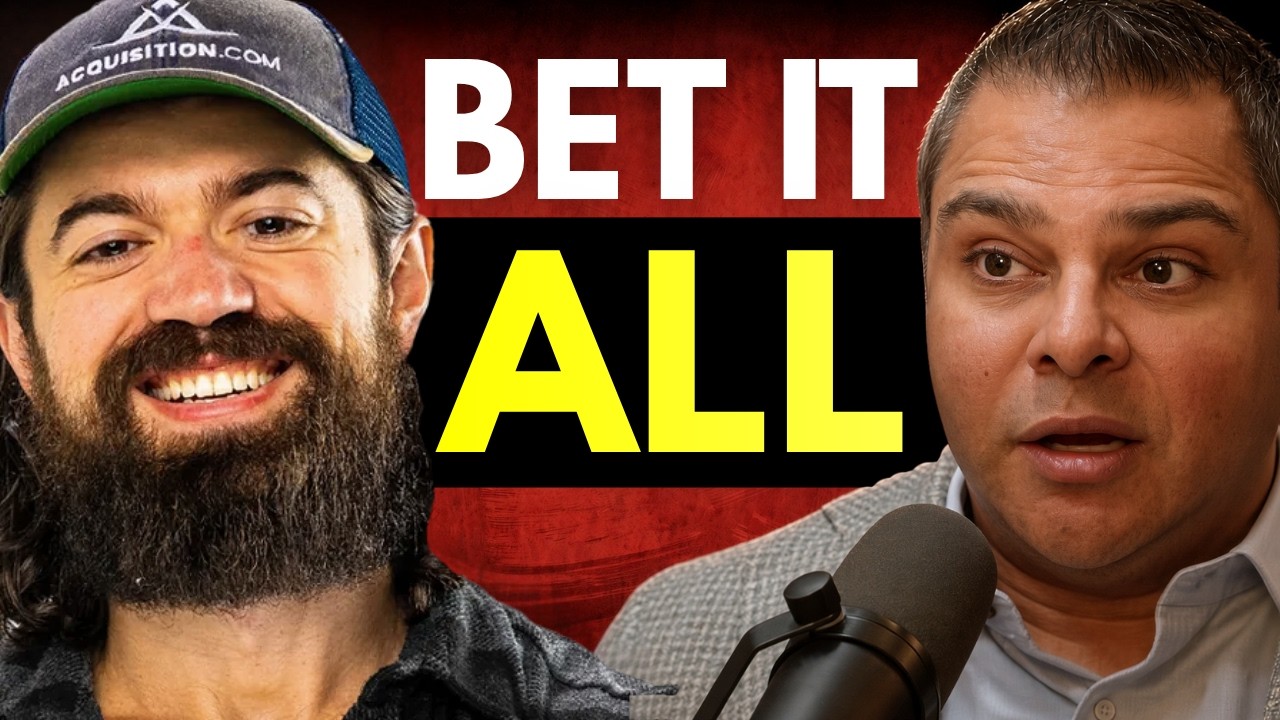
How The Rich Use Real Estate to Make Infinite Money
Tom Safran, Chairman of Thomas Safran & Associates, joins Taylor Avakian to discuss a 50-year career developing and managing affordable multifamily housing across Southern California.
Show notes
The conversation covers his path from early government work into development, first projects, partnerships, and long-term ownership of properties.
Topics include the early days of HUD programs, the origins of Section 8 and the low-income housing tax credit, structuring partnerships and buy-sell agreements, acquiring and repositioning existing buildings, working with cities, and the practical realities of developing affordable housing in California over multiple decades.
Chapters
- 0:00 Opening thought on controlling property
- 1:18 Welcome and early interest in buildings
- 8:19 HUD years and move to Los Angeles
- 15:50 Leaving HUD and first project
- 25:22 Scaling up and forming the company
- 34:30 Partnership lessons and agreements
- 38:19 First sense of having made it
- 45:23 Challenging deals and federal housing policy
- 52:01 Building affordable housing today
- 54:48 Starting over and buying existing properties
- 1:00:30 Relationships and the Golden Rule
- 1:03:55 Closing advice
Episode transcript
Transcribed from the episode's automatic captions, so some names and terms may be spelled wrong. Speaker names were also added automatically and may be wrong in places.
Read the full transcript
0:00 to 10:00
Tom Safran (0:00): You can do what I said, you know, the old expression here she who has gold rules in real estate. The person who has the property is the one who rules.
Intro (0:08): Tom Safran is the chairman of Thomas Safran and Associates, a company that develops and manages affordable housing. He has over 50 years of real estate experience.
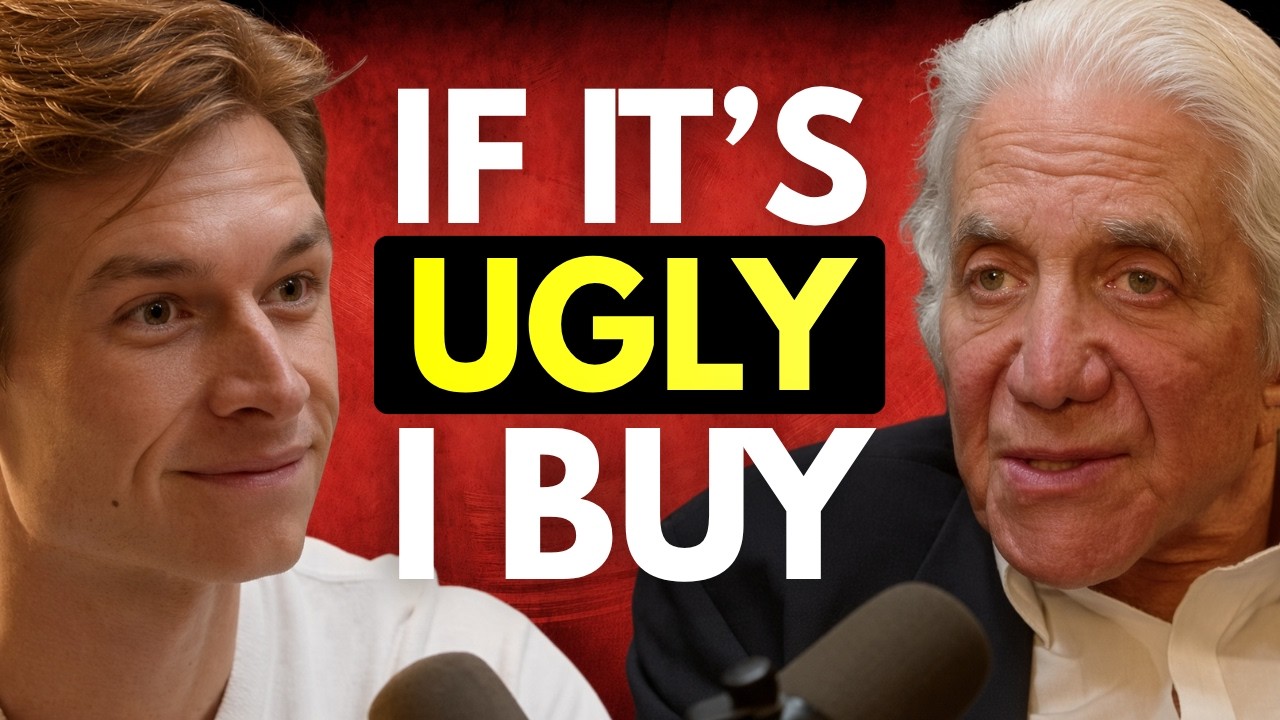
Tom Safran (0:16): The way I was raised, I operate by the golden rule and I also operate by win-win partnerships. I have been stung lately with our president who is a total win-lose guy. The higher you rise, the farther you can fall. And I was more comfortable doing singles and doubles, which is all I ever hit in baseball anyway. I was not a home run hitter. If you think back to the '50s, when I grew up, the upper tax rate was 90%. The CEOs didn't make 5,000 times the average worker's salary. A group of us went to meet Governor Reagan and I said, "Governor, what do we do with low-income people?" Whatever is trickled down at the very bottom is what's left of it. And under his breath I heard him say, "I guess." Some of my best deals are buying the unattractive, the ugly, the not well done.
Tom Safran (1:03): Buying properties with decent to good locations. They had paid 200,000 for that building in '73. Now they're getting 4 million for their share and they have a value of lucrative deals.
Taylor Avakian (1:16): This is how the rich get richer.
Taylor Avakian (1:19): Welcome to the show. My name is Taylor Avakian and I am here with my esteemed guest, Tom Safran. Tom, thank you for being here.
Tom Safran (1:27): It's a pleasure.
Taylor Avakian (1:28): Eight years in the making. And you were one of the first people that I met with when I was in brokerage. The stories, right? All All I heard was Tom Safran, Tom Safran. He's a legend in the industry. He's done so much. He's built incredible things and you've been doing this real estate stuff for a very long time. So, where I'd like to start is bring me back to that first moment, which I know you worked 5 years in government. How did you get into real estate, Tom?
Tom Safran (1:57): Giving a backstory, I was into real estate as a little boy in the basement of our house in the suburbs of Chicago, and I had Lincoln Logs. We didn't have LEGOs.
Taylor Avakian (2:13): LEGOs, LEGOs.
Tom Safran (2:14): Yes. Which everyone or they're all over. We didn't have that then, but the American Skyline were interlocking blocks, and I used to play with them in the basement and imagine a 10 and and I'd do 10 and 20 story buildings. But my father was a scrap metal dealer, and I had no connection or association with people in real estate industry. But in high school, I took a course in mechanical drawing, the only thing they offered, and I hated it. So that kind of shied me away from it for a while, for quite a while. Meanwhile, the first 8 years of my life we lived in Hyde Park by University of Chicago, and I used to walk by Frank Lloyd Wright's famous Robie House, and I realized how much I loved design and architecture.
Tom Safran (3:06): So that was my attraction. Now I go off to college, Trinity College, Hartford, Connecticut, and you had to pick a major, and back then in '63 to '67, we had 4 years to go to school to get a deferment from the military. So I picked math to major in cuz I was good at it, and I was going to go to medical school, and junior year, I had a theoretical math course, and over the first 2 weeks I couldn't do any of the problems, and I said, I think my math career is over. And then I hated organic chemistry, so I had to pick a major, and I picked psychology.
Tom Safran (3:53): And that lasted till senior year when I said this isn't for me either. And I ended up really liking political science and I took three courses that inspired me. The first was state and local government and I had to write a paper on a major political event in the town suburb Glencoe, Illinois that I grew up in. The second one was American political parties. You had to volunteer and work on a political campaign. So, I volunteered for a Republican running for state assembly back in Connecticut in Hartford. And she finished really well. She finished a close She got 47% of the vote.
Taylor Avakian (4:41): Wow.
Tom Safran (4:42): And I am an ardent Democrat today, but that's how I started and actually I didn't. Senior year of high school, I worked on Donald Rumsfeld for Congress. He was a graduate of my high school. He was 29. I was 17. Because all this is relevant because all the projects I do are very political.
Taylor Avakian (5:08): Mhm.
Tom Safran (5:08): So, I worked on his campaign for Congress. He won and he was of course a Republican. He was defense secretary and George W, but he was also White House chief of staff for Gerald Ford. But the third course I took was international city planning taught by Constantinos Doxiadis and we had to read a book called Great The Life and Death of Great American Cities. That This is what happens when you get older and maybe when I go my brain Jane Jacobs was the author and that book inspired me. Along with the year before, I read Ayn Rand's The Fountainhead, and it's about an architect who is very passionate about his work.
Tom Safran (5:57): But at the end of the story, at the end of the book, they develop or build a building he hates, not the building he believed in or designed. And he destroys As I remember it, he destroys the building. I could check it out. I reread it, or Gary Cooper's in it. But the conclusion of that was Tom jumping an architect being a developer. They're in charge. And so, now I get a one Y. I volunteer for the Navy OCS, but because of football injury, I don't qualify. You have to be able to do a push-up like this with your both hands, and I do push-ups like that. And fortunately, I didn't qualify, so I took off to Europe and spent a glorious 14 months there after college.
Tom Safran (6:53): And it included being in Finland, going to a new community called Tapiola outside Helsinki. And I realized what incredible work developers can do. They can take this raw land and create an entire new community. And lo and behold, later, I got got involved with Irvine, which was a similar thing here in Southern California. Anyway, I come back to the United States, and I decided to do some graduate work at the University of Chicago in political science, urban studies. And while there, one of my professors uh taught city planning.
Tom Safran (7:40): He taught the history of cities, but he happened to be on the Chicago Housing Authority. And I was looking for a summer job in the summer of '69. I'm 24. And he suggested I talk to this woman at HUD. And the woman at HUD ran an urban internship program. It was a year long. I thought, I'll apply for it, do it for 3 months, quit, and go back to school. But I ended up liking it so much that I stayed. And I didn't go back to school. And at the end of the internship, there was a match. The Department of There was a division called public housing division.
Tom Safran (8:26): There was also FHA. There was also urban renewal, water and sewer grants. But the people that matched with me, that liked me, and I liked best were the public housing division. And at the end of the year, they assigned me to Iowa and Nebraska. And my job was to be a liaison with the housing authorities, which were mostly the city councils and in each city. So again, being very politically active, and here I'm now 25 meeting with the city councils of Des Moines and Lincoln, et cetera. And uh I learned an incredible lot of how to work with cities, communities, elected officials, staff.
Tom Safran (9:15): But along the way, soon after I started HUD, I came to a wedding in LA. It was a magical weekend. It was the first weekend after Labor Day. The wedding was at the Bel Air Hotel. The rehearsal dinner was the Beverly Hills Hotel. They put me up in a house Rockingham Brentwood. Gave me a convertible, a red convertible to drive. And LA happened to be 80° the smog was really low. It was dry. That summer in Chicago, it rained and ruined almost every weekend plan that summer. It was an enormous amount of rain.
10:00 to 20:00
Tom Safran (10:02): And then on Sunday after the wedding, we went to Laguna Beach. Somebody owned a house on a cove in Laguna. It's the first time I'd been west of Dallas when I coming here. And the water was as warm as it gets in September. And after Laguna, we went to Disneyland. Then I took a red eye back to Chicago and I said, "I'm moving here."
Tom Safran (10:27): Oh, and one more thing. That was when LA's traffic was the 20-minute rule. I'd ask people how far they never said 10 miles, they'd say 20 minutes. You're downtown then at 5:00 to go to the west side, 20 minutes.
Taylor Avakian (10:42): Wow.
Tom Safran (10:43): To go to the valley, 20 minutes. That's what the freeways were for. That was fabulous. LA's county population was 7 million. And uh Orange County the population almost doubled since then in the greater you know, Southern California
Taylor Avakian (11:02): Yeah.
Tom Safran (11:03): But the freeways were designed for that, not what we have today. I got HUD to transfer me here. And in October of '70, when I was 25 and 3/4, I became a multi-family housing rep for LA County. My first day on the job, um I get a telephone call from a property owner, a gentleman. He says, "I have this property at the corner of Wood City and Van Nuys. What should I do with it? And I said, where's that? And he said, in the valley. And what did I say? Where's that?
Tom Safran (11:45): And I vowed I would get to know Los Angeles. That evening I bought a Thomas Guide book. Do you folks out there remember those? I still have mine in the trunk of my car.
Taylor Avakian (11:57): Wow.
Tom Safran (11:57): Um and I a few weeks later bought a big wall map at my expense and we put it in the conference room wall. We didn't have computers then. So, where a project was was just institutional knowledge. So, here's an example. Pomona was a all white community. In 1968, Lyndon Johnson got through Congress the Civil Rights Act in housing. And he made a comment then, we are going to lose the South for generations. Think about it. The South after Lincoln's proclamation became Democrat because he was beginning of the Republican Party.
Tom Safran (12:47): And now with what Johnson did with housing and then the Civil Rights Act in '64, public accommodations, the South transformed over the next 20 30 years and became virtually heavily Republican. And now we're seeing breaks in it like purple state like Georgia. That was my beginning working at HUD. Now, remember I was going to leave after 3 months, but I liked the work I was doing so much more. I was working with the housing authorities of LA County. Back then, there were LA City, LA County, Inglewood, Compton, and Long Beach, and then the sixth was Pasadena. So, my job was to be a little liaison with them, and developers, and nonprofits who were using HUD programs.
Tom Safran (13:38): And a big one that was 236. Nixon gets reelected in '70 two, and January 5th, I can vividly remember this, they put a moratorium on all HUD programs. Not that he wanted to stop, but he wanted to do it his way. He was implementing his first term all of Johnson's programs. I mean, by my standards, he was a saint compared to what we have today, and he was a liberal compared to where the Republicans are today. He and Jerry Ford all started with Reagan. So, here's the last story of working at HUD and going off on my own.
Tom Safran (14:25): It was always in my head, I want to be a developer. But I didn't have any money, and I didn't know how to do it. And I was pushing the state of California, as part of my job, to create a housing finance agency. And a delegation of us, about 10 of us, met with Reagan on his last years governor. And urging him to not veto for the third year in a row the creation of a housing finance agency. Because what I Oh, along the way, I went to Washington and in '73 worked six months on a task force to create new legislation as a result of his moratorium.
Tom Safran (15:16): He had task force to figure out where we going next, how are we doing? And the conclusion of his task force was the first legislation that Jerry Ford signed in August after Nixon resigned in '74. It created the Community Development Act where they gave block grants to cities and counties instead of all these individual programs. And secondly, it created the Section 8 rent subsidy program. So, that was again signed um maybe a week after Ford became president. Meanwhile, back in April, a friend of mine said he was leaving HUD and he started after me.
Tom Safran (16:03): And I said, "You can't leave before me uh because you know, you've only been here 4 years. I've been here 4 and 1/2." So, I turned in my resignation and 2 months later I said goodbye uh for a second time because the first time the year before I went to Washington. And while I was in Washington, my boss was an assistant secretary of policy development and research and he had a PhD from Princeton. And the people I worked with all had master's degrees. And my driving group senior year all had law degrees or MBAs or PhD.
Tom Safran (16:52): And I felt you need to get an advanced degree. And so, I applied to UCLA and I did the part-time MBA. They accepted me and I started in September of '73, returned from Washington to do that. Last day in the office to April when I left, I left on a Friday in early April and on Monday I was a consultant at Orange County and the city of Santa Ana on how to do a 200 unit project with a special funding program called 23 which was folded into Section 8 with the legislation and a developer had proposed a project on redevelopment land right by City Hall and they paid me $2,500.
Tom Safran (17:52): They followed all my advice. The project got built. Remember I'm getting working my MBA part-time. I turned in my paper to the city council for independent study real estate development finance. I got an A and 22-3 years later I bought that building. And I had for $60,000 or or 50,000 a unit. It's worth 450,500 today.
Taylor Avakian (18:25): Wow.
Tom Safran (18:26): 10-story and a three-story building.
Taylor Avakian (18:29): Wow.
Tom Safran (18:30): That was one of my home runs. I mostly hit singles and doubles. Didn't go for home runs but once in a while you get those home runs.
Taylor Avakian (18:39): Yeah, you do.
Tom Safran (18:40): And I learned that from the likes of a second turf or people who shoot for the moon. And uh you you know, the higher you rise the also the farther you can fall.
Taylor Avakian (18:53): Mhm.
Tom Safran (18:53): And I was more comfortable doing singles and doubles which is all I ever hit in baseball anyway. I was not a home run hitter. So
Taylor Avakian (19:04): Play to your strengths.
Tom Safran (19:05): And absolutely in what you're comfortable with. Now remember I left HUD and this is important when I left HUD, I lived in an open garden apartment complex at near the third in Vermont. The HUD office was uh nearby near MacArthur Park at 2500 Wilshire. So I either rode a bike, which I still do today a lot, or walked there. And rarely drove. So I'm working on my MBA. My rent is 220. I didn't own anything. It was a furnished apartment. It only had a a rental piano from Hollywood Rent-All. So nothing in it did I own. But when I left HUD, I got the cash value of my HUD retirement account, which was worth about $5,000.
20:00 to 30:00
Tom Safran (20:00): So since my rent was 220, my last salary at HUD was $15,800. 5,000 meant a lot to me.
Taylor Avakian (20:09): Mhm.
Tom Safran (20:10): And in September, late September, early October for my MBA, I gave a speech to my class how to do a hypothetical 100-unit senior project in the city of Inglewood using the new Section 8 program. And while I'm speaking to the class, I said, "Why don't you actually do it, Tom?" And I remember this so vividly. And when that class was over, my learning curve went up enormously. I was able to talk Mr. Fischer in North Washington on Eucalyptus, one block west of Sentinel, you know, one block west of La Brea, a couple blocks south of the Sentinel.
Tom Safran (21:02): Within two blocks of a bus stop and supermarket, which was important for HUD in the city first sight. Since I had worked at HUD and worked with Inglewood, I knew what they liked. I knew that this would be a project. So, I tied was able to convince him that tie up this one acre with he had chickens. He raised chickens and he lived on one acre, but it was multi-family land. And he convinced his two neighbors Inglewood, interesting to note, with the Civil Rights Act had been all white and now it was going black. And Mr. Fisher and his two neighbors were seniors like me today.
Tom Safran (21:47): And they were getting afraid or concerned and they decided they wanted to leave. So, I helped him relocate up to Lancaster for like a third of the price. I paid for his property and so he had the cash left over. And his two friends moved up there nearby and I helped them relocate. Because it was an owner-occupied, there was no relocation required. And which made it easier to get HUD approval. So, now I controlled these properties, the two adjacent pieces, 500 for 3 months, a year's escrow, payment every 3 months.
Tom Safran (22:33): I didn't have the money to to carry this out. I only had the money to tie it up. And so, I tell your listeners out there, uh you can do what I did. You know, there's the old expression, he or she who has gold rules in real estate, the person who has the property is the one who rules. If you have control and it's a good, valuable, important piece of property, you can make the deal. So, I went to one of the developers I had worked with back at HUD because that was one of my jobs and they agreed to give me 20% of the deal, reimburse my 2,000 which was super important to me and I would be a partner and my job was to get HUD and city approval and we did and it became a 93 unit project and that was before the California Environmental Quality and that was when we dealt with HUD for Section 8 financing 221 D4 and FHA multi-family program and the Section 8 rent subsidies, one-stop shopping one attorney, simple contracts cuz our contracts how affordable rich today it's mind-numbing to change.
Tom Safran (23:52): So, it was wonderful then and uh we got the project under construction in less than a year and it took us less than a year to build it. The average time for these projects now is 5 to 10 years to get it under construction and double to build it. It's just longer for all kinds of reasons and for years they I was 29 when we started. They were in their 50s and 60s. And when we would meet they'd always say, "We've always regretted the projects we've sold. Hold on to your project, reposition, refinance, take the money out.
Tom Safran (24:39): But if you have a good project, good location you know, take the money out and buy something else and reposition it." But their children didn't agree with that. I inherited their children first spouses then 35 years later, they wanted cash. So 15 years ago, I bought them all out and was able to rehab the project uh the way I really would have always loved to. And I even though I had a management company, they wouldn't let me manage it. So that was my first project and uh
Taylor Avakian (25:22): You still own it today?
Tom Safran (25:23): And I still own it. I'm still the managing partner. It's 93 units called Eucalyptus Park. And uh here's an interesting backstory. After I did that project, I bought several other buildings in the city. And if you do quality, um
Taylor Avakian (25:44): [clears throat]
Tom Safran (25:44): they come to you. The council comes to you. So I was standing before the city council on my fourth project in the city. And a council member who represents, turns out, Eucalyptus Park, said, "When you're done with this project, I'd like you to come to my district and buy this project and rehab it. It's in terrible shape because my partners were managing it. I won't say into the ground, but they were doing the absolute minimum and they wouldn't listen to me. Um but I said, "You could make a difference." When I asked her what the address was or where it was, and then I went, "Oh my god, that's my original project."
Tom Safran (26:34): And uh I said, "I would love to work with you on it, but you're going to have to help me because you've got to make tough life tough for my partners to get them to upgrade and fix it up." So I made the effort to meet with the widows and children of my partners. One of the partners was alive but not well. And he died within a year. And I was able to talk them into selling to me. And I fully rehabbed it, repositioned it. And the city and the residents love it. And it's today one of my favorite buildings.
Taylor Avakian (27:19): Wow. How? That's incredible. Because you did the first project and you were able to basically tie it up and get the money that way through, you know, the You didn't need a ton then. But then you start to expand. And when did Thomas Safran & Associates start? And how did you get the money to go and do these new projects to continue to expand? Cuz you were exclusively doing government contract affordable capital A affordable housing, correct?
Tom Safran (27:48): And that's been 90% of my career. I've done market rate. And for one reason or another, I've done about five. Some beautiful projects. But for one reason or another, I did a great uh multi I did about six projects in Carson. One of my first projects was in Carson where the land was $1.25 a foot in 1975-6. And the guy I gave the seller what I was thinking of doing. And he said, "We'll do that." And I go like, "Oh." And I didn't have, you know, I was on didn't have a lot money. Not a lot of money at all.
Tom Safran (28:36): And but I had bought a condo. My father helped me. I bought a townhouse in uh Westwood Village. So, I owned a townhouse right by UCLA where I was going part-time, which made it really easy to go to UCLA and finish my degree. I took 4 and 1/2 4 and 3/4 years to finish it because at the end I was taking one course a quarter cuz it was really hard to work full-time and go to school.
Taylor Avakian (29:05): Totally.
Tom Safran (29:06): And anyone who does that, I salute you. But and at the beginning it was really inspirational. Later I was more like, "Okay, what other course do I have to take? We got to finish this. I got to complete it." So, I did it in '78. So, almost 5 years after I started I finished it.
Taylor Avakian (29:27): Yeah, so how did you get the money to do the other projects?
Tom Safran (29:30): So, in his case, he was a rich part-time developer. He had He was in a multiple buildings. He owned a board and care in Carson. Don Freeburg was his name. And his office was in Glendale. He owned an office building. And uh so, I became his developer. But he had the right to buy me out at completion. And the sad part of that story is we got 100 units approved on that site. I did all the work. He paid me a set fee. And when the building was finished, he bought me out. I was his partner for the beginning.
30:00 to 40:00
Tom Safran (30:15): And every all my favorite at HUD worked on that project and would say, "Oh, Tom, I promise that you'll be happy with the rents. Oh, Tom, you'll be happy with the mortgage." And I'm all like, "Do that on one. That's my deal. This is benefiting him." But now he's passed away and his kids I've offered to buy it, but they won't part with it. But that was like building number two that I worked on. Building three through eight, nine one of the developers I worked on it had was Ron Levine. And he and I met and agreed to do deals together 50/50.
Tom Safran (31:02): So, I went from 20 to 50/50 and his family would put up the money.
Taylor Avakian (31:08): Wow.
Tom Safran (31:09): So, so he and I would each get 25% of the deal and his family would get 50 and they were rich. And they signed and guaranteed the notes. He was a contractor and he had his own management company. And so we I worked with him from '75 to '79 and we did some wonderful projects in places that never had it before. Camarillo they never had affordable housing. Lakewood West Covina, La Verne uh and a few other places. But by '79 he and I kind of hit because every project was built over budget.
Tom Safran (32:02): It turned out he didn't hire well. He wasn't a good contractor and I didn't know. And one of the dumbest things advice out there, I don't care what it costs, have your own attorney. Instead I oh, I like these guys. So, their attorney was my attorney. And when the when he died and then his wife and I inherited his son oh my. My agreement didn't protect me. I'd offer a dollar to buy it, and they'd say no. They'd return it 50 cents.
Tom Safran (32:47): And they offered me, you know, I it didn't have a good buy-sell agreement. It didn't protect us. And after 5 7 years of going back and forth, we're talking we're now in the '90s, you know, when they had done.
Taylor Avakian (33:07): Yeah.
Tom Safran (33:08): And so you've got to make sure you have good buy-sell agreements. And it's now happening to me big time in a number of projects. All my early partners, investors, passed on. Almost all have passed on. So if I'm 81, and they were my investors starting in '79 when I brought in the investors, um they've passed away. I've inherited the wife. In one case of 15 projects, I have the grandson. I have the children of one arm and the grandson of the other. And the grandsons my daughter, my I have a daughter who's 40, son 50. And another son, a little older.
Tom Safran (33:55): And it's really difficult because they approach it differently. They did [clears throat] not do the deals.
Taylor Avakian (34:04): Do you think
Tom Safran (34:05): And in a lot of the cases, they don't own it. They are carrying out projects for which, if they have ownership, it's spread in the family and diluted. So that's a major problem. So your attorneys have got to protect you and make sure they cover that. Don't think these things don't happen. How dramatically it changes over that cycle.
Taylor Avakian (34:30): Did uh experience with partnerships change your view on how you view partnerships? And And the way the reason I'm asking that is because a lot of people who maybe are starting out don't have a lot of money, but have the drive and passion to do affordable housing and to build this stuff, they need money, right? And so, if they don't have it, they got to go get it from somewhere. And then a lot of times that looks like a partnership. Does Has your experience change the advice you have for partnerships? Do you think they're important or how do you how What advice would you give to someone who needs that partner to go and build? And are there Is it important to have a partner nowadays?
Tom Safran (35:06): Of course, because unless I don't know what that miracle is, unless you're coming to it with the money and the financial statement. I remember I used to dress up, put on my blue suit, and go to the bank. And that first partnership in Inglewood, my partners were [clears throat] amongst others Sam Ocean. If you go to the Griffith Park Observatory, you'll see his name. He He recreated He went to South Pole, the North Pole. He uh He was an adventurer. He went on elephants through the Alps to recreate Hannibal. Anyway, he was an incredible guy. He had the money, but he said, "You need partners because you can't do it all.
Tom Safran (35:54): You need people who have other strengths. And unless you are born with the money, but even if you have the money, then you've got to create a team of people who are invested. And what I've learned for myself from the beginning, the way I was raised, I operate by the Golden Rule. And I also operate by win-win partnerships. I have been stunned lately with our president who is a total win-lose guy. I'll do my editorial. Um he's in real estate and he does his deals win-lose. From the beginning, I would never take unduly advantage in any way of my partners.
Tom Safran (36:40): I always wanted the agreements to be win-win for all parties. But when I went back to that project um or the second through like seven
Taylor Avakian (36:55): Yeah.
Tom Safran (36:55): projects with Ron Levine and I made the mistake of not having good buyouts. That wasn't an equitable partnership. It favored them. The attorney was their family attorney
Taylor Avakian (37:10): Mhm.
Tom Safran (37:11): who I became quasi friends with. So you've got to have people who represent and protect your side. At the same time, I was always committed to win-win agreements and the majority people out there don't operate like that.
Taylor Avakian (37:31): Mhm.
Tom Safran (37:32): And I have a northern European bent. Um you know, there's so many people and it goes from our president on down who don't approach things the way he's negotiating tariffs, the way he treats other countries. Uh is such a problem because they want to be treated win-win.
Taylor Avakian (37:56): Do you do you remember the first moment because you said you grew up relatively in humble humble means? Do you remember the first moment where you felt like you had made it? How long did it take you to feel like you were comfortable and and you were going to be successful in the traditional sense of the word um monetarily, but do you do you remember that feeling or do you remember what what that was like?
Tom Safran (38:19): It really wasn't till the first time I really really felt it was I did a 150 I did a mixed-use project in Carson across from City Hall. And I owned a house in Northern California. After I did a project several projects in the Bay Area. Our portfolio today is San Diego to Fresno. But I started out because I love San Francisco. And I did a project with a guy who just called me that he said we haven't seen each other in 40 years. But we did it in Redwood City. And it didn't have an equitable buy-sell agreement.
Tom Safran (39:07): The equity investor had a better deal on sale. Then that's another important one. Make sure the incentives to own are the same between partners to sell. Because otherwise in this case they made twice as much percentage-wise selling the deal. That is a goldmine. We did this in downtown Redwood City. I wanted I'll come back to Carson. But I wanted to digress. I did that in 75-6. It was owned by the first Baptist Church of Chica- Los Angeles. I went to s- Sunday services two Sundays in a row.
Tom Safran (39:56): First Sunday sitting next to the pastor's wife. Second Sunday sitting between the chairman the chair of the board and his spouse. And they liked me enough to agree to sell me this property that had been donated. On And property was a metal plating plant, a gas station, um an alley that we got closed, and it became a 75-unit senior housing project. That was before the California Environmental Quality Act. We tore the buildings down, put an extra layer of concrete on it, which I think was plenty to do.
40:00 to 50:00
Tom Safran (40:43): No subterranean parking. The building got under construction in 11 months, and it took 12 months to build. Similar to the Eucalyptus one in Inglewood. Think about that. That site would be 10 years trying to get clearance from the state agencies, and you would be killed on the the California Environmental Quality Act. And why is it California in so much trouble? That's one of the biggest reasons. And that the problems I've had with that act stopping, slowing down, reducing our projects is legion. So, when we closed the deal, my friend had a house in Strawberry Peninsula, north of Tiburon, across Excuse me, north of Sausalito, across from Tiburon and Belvedere.
Tom Safran (41:42): And I said, "This is heaven." We had dinner at their home. It's right on the water. And his wife said, "If you like it, there's a house for sale up the street." I went up the street the next morning with my then girlfriend. We walked around the house. It was not occupied, but for sale sign was there. I put an offer in. Here's another one. I was the only one with an offer from the listing broker. Who did she want to be the buyer? Me, because she didn't share the listing commission.
Taylor Avakian (42:18): Mhm.
Tom Safran (42:19): So, she hinted at what I needed to offer to get it. 379,000. The seller took that 279 for 7% for 7 years. I put $100,000 down. No bank would have lent me the money at that time to buy that house. And so, that was 79, and they wanted a 9-month escrow. In that 9 months, all the projects I was doing in Southern California went ahead, but only one went ahead in the Bay Area. And I chose not to move up there, but to stay in LA.
Tom Safran (43:04): But, I rented it out, and I owned it 24 years, and it was rented out to three tenants. And each time the tenant occupancy came up, which is only three times, um I loved it. I'd go up there, and it was beautiful, on the water with a boat dock. Finally, after 8 24 years, I sold it. And I traded it for a property in Carson, where I built about 300 units with ground-floor retail at the corner of uh Avalon and Carson Boulevard, directly across from City Hall.
Tom Safran (43:49): When I sold the 150, I kept this the affordable, but we I we had 150 market-rate units. And when I sold that, I had oodles of cash in the bank. That is when I said you have arrived because prior to that, as soon as I got money, it went to the deal, the other deal, the other deals because I kept, you know, paying from Peter to pay Paul and staying afloat. But, that was the first time I put some money in the stock market.
Taylor Avakian (44:28): When what year was that?
Tom Safran (44:29): Eight, nine, right right when we had the crash. Yeah.
Taylor Avakian (44:33): Wow. So, you had been doing So, you had been doing business for 30 years and you had felt like you were just recycling this cash and that was the moment when it was like, oh, okay, I've actually
Tom Safran (44:46): And I had the money to pay my bills. There were times where I had to really, how am I going to pay my employees? I always did, but there were there were times that were really challenging. And my brother and my father. One of the most challenging projects I did was Struthers Park in the Sun Valley area. We had a council member where I submitted, also in '79, I submitted a project in uh in an area, this is where you know, my memory gets a little foggy. It's up in uh Southeast Selma or Pacoima It was near Pacoima.
Taylor Avakian (45:34): Yeah.
Tom Safran (45:35): But, it was horse country. And uh foothill. It was up in that area. And people riding horses would cross the property. HUD approved me for 100-unit family project, Section 8 in '79. But, the councilman, after the approval, said, "You got to move it. This would cause me too many problems." So, we transferred the funds to the site on Strathern just west of Vineland in the heart of Sun Valley. And I had a little older charming lady who lived in West Hollywood and she was the broker and got 10 adjacent sellers to sell her five and a half acres of land.
Tom Safran (46:27): 10 sellers. And uh and that became Strathern Park. And we built townhouses there. And when that project was done, that was Section 8. When that project was done, the council person said, "Now I want you to go across the street and clean that up." So, I went across the street and tied up 10 acres, 10 properties again. So, I was mini redevelopment agencies. And the purchase price was five and a half million. And I didn't have the money to frankly close on one of the properties. And I kept that going for several years.
Tom Safran (47:14): And what had happened when Nixon left office and Ford took over, then we had Carter. And Section 8 was a program that Carter carried out and Ford carried out. But Reagan comes into office and I'll go back with the story which I didn't finish. When in '74, working at a HUD before I left. So, this would have been like February, March. Um the legislature had passed the creation of state housing finance agency. A group of us went to meet with Governor Reagan. And we urged him not to veto for third year in a row the creation of state housing finance agencies.
Tom Safran (48:06): And his comment to me was, "I don't believe the government belongs in housing." And I had statistics to show that the government is involved in a big way. People who buy a home can write off their interest. And that cost the Treasury. I had the statistics 6 billions of dollars. And uh and he was still shook his head and he turned away and he talked to other people. I finally got his attention again and I said, "Governor, what do we do with low-income people? What's if if you aren't going to come up with any funding for them, what what do what do you do?" And I just sort of sort of the trickle-down story, which is whatever is trickled down at the very bottom is what's left for them.
Tom Safran (48:56): And under his breath I heard him say, "I guess." So that philosophy is when everything started to change for the Republicans. Ford, Eisenhower, Nixon, they're saints by my definition comparatively. But Reagan in his warm, charming way made made it okay. And so we had nothing. We were just carrying on the Section 8s that were funded but no new stuff. In '76, 6 years later, um he wanted a big tax cut. And if you think back to the '50s, when I grew up, which was the booming time for this country, unbelievable, and the growth of the middle class, the upper tax rate was 90% the CEOs didn't make 5,000 times the average worker's salaries.
Tom Safran (49:59): It didn't exist because of the high tax rate. So, Reagan gets his tax cut. But, the housing people got the federal tax credit. And they put that program in there. And it applied for people making less than 60% income. And that program still exists today. But, that's how that came about. And uh that's what we've been working with ever since. That is the main program available on a federal level. But, what happened with the creation of state housing finance agency, California, Reagan vetoed it again. Third time.
50:00 to 1:00:00
Tom Safran (50:45): But, what happened that fall? He was turned out. And Jerry Brown became governor. And when he became governor in January of '75, he had a special section of the legis- session of the legislature and they um created a state housing finance agency.
Taylor Avakian (51:10): Wow.
Tom Safran (51:11): So, when I started, who was in charge of all the programs? The feds. The feds had everything. Massachusetts before did it some a few years before, created one. But, now that program required every state to create a state agency to receive the tax credits, to administer it to local government. And so, um over time, the state has given special allocations to the big cities. For example, LA, San Francisco, San Diego get their own allocations in California of tax credit. But, that's pretty amazing. From '86, that's 40 years ago.
Taylor Avakian (51:59): Yeah.
Tom Safran (51:59): That program is still going.
Taylor Avakian (52:01): Wow. Do uh do you think that today, if someone wanted to go and build what you built, it would be possible?
Tom Safran (52:10): Yes, and they are. Um but it's such a change. When I started, there you could put all the developers, the major developers, in a meeting in this room, like 10. And now, there's so many because for all kinds of reasons. People who do market rate say, "We have to do some affordable." Or, what happened is those Section 8 project proved to be incredibly valuable because there's guaranteed income stream. And HUD, think about this. S- In when I grew up, the interest rates were 7%, period. 1974, that year when I left HUD and started, interest rates climbed to 10%.
Tom Safran (53:01): And uh but then they came back down. But then they went back up. In s- um '79 also, why not do a condo project, Tom? So, on land left over from a Section 8 project we did in the heart of Lakewood, my partner and I did a condo project. We opened in '81. Do you remember the interest rates in '81?
Taylor Avakian (53:29): It's like 14 or something.
Tom Safran (53:31): 15 or 17%. We offered our buyers the bargain basement rate of 15%.
Taylor Avakian (53:39): Wow.
Tom Safran (53:40): Did we sell one? Not a one. And how did I bail myself out so I've never had a foreclosure? We I talked This is all the relationships. Why it's so important, all the connections that I've had. I knew people at Caltrans, the California Department of Transportation, and they were looking into finding housing for the Century Freeway relocatees. Cuz they're building Century Freeway, they were going to have to relocate everybody in the path. So that became the 105 Freeway. And I they bought off me that project because it was a couple miles from the quarter.
Tom Safran (54:26): And uh
Taylor Avakian (54:27): Wow.
Tom Safran (54:28): And I didn't make any money, but it bailed us out. Yeah. We didn't lose anything. And uh but that's also the last time I did a condo project.
Taylor Avakian (54:38): If uh if you were starting over again, like in your 20s or something like that, what would you what would you do? What what would you build or would you do the same thing?
Tom Safran (54:48): I would certainly specialize on existing retail.
Taylor Avakian (54:52): Mhm.
Tom Safran (54:53): Some of my best deals are buying the unattractive, the ugly, the not well-done buying properties with decent to good locations. For example, one of the best deals I ever did, a developer who I used to fight with at HUD, was selling a portfolio of eight buildings in 2008, and it was 804 units in eight buildings. Two were in Inglewood that I referred to. And they were in three unincorporated areas. Of course, the three supervisors that I didn't give money to.
Tom Safran (55:38): Which So, what did I do? I was able to buy these eight buildings by putting a million dollars down, 60 days, all cash, no contingencies. And this is before the collapse of the economy of the interest rates, just before the deal. And then I had to find somebody to help me with the money. But he was gold rules. So, I had the control of the property, and I made a deal with investors. Um people [clears throat] who I was partners with in other deals. And it turned out to be a home run for all of us.
Taylor Avakian (56:19): Wow.
Tom Safran (56:19): And uh we bought them for 80,000 unit. The morning after I closed, I had lunch breakfast breakfast with I'll say Stan Eisman, who's a big player out there. And he said, "What's the cap rate?" I said, "I don't know." "What's the gross rent multiplier?" "I don't know." "What do you mean you know? No. How could you not know?" And I said, "It's 80,000 unit. Um you can't replace it for double that, triple that." And uh and I knew the locations. And at confession time, I only went to seven locations.
Tom Safran (57:04): Because I did the other one on Google. I mean, that was something which we never had. You could get to know the neighborhood, etc. So, I totally believed in it. So, with my partners, we bought the eight. And then I had to do my political homework. So, our goal was to rehab them, make them all affordable, get tax credit for all of them. And five were Section 8, three were not, but they were in pretty deplorable condition. And here's the story. So, I meet with the broker, brings it to me cuz he office down the street, he knew us in affordable housing.
Tom Safran (57:49): And when I realized who the developer was, that was the developers I said I'd fought with at HUD. I said, I got to meet with him. And he said, "Yeah, you got a problem. He thinks you're a FA or that was the word. Um a B."
Taylor Avakian (58:06): Yeah, I know.
Tom Safran (58:07): Um and uh So, I met with him and I told him, "I'm your best buyer. I'm a win-win guy. I don't play any games. Um we will, you know, I'm buying it as is." Of course, he took it to the extreme. So, we had two months escrow. What did he do in those two months? Didn't maintain a thing. So, within the first two weeks, I met with the residents of all eight buildings. We did our dog and pony show. And we had money to fix things immediately. We had about a 80,000 loan.
Tom Safran (58:52): My partners, this is how the rich get richer. My partners, sold the building for 8 million. They traded that 8 million building into buying one of the eight buildings that we happen to be eight eight, eight buildings we were buying. They had paid 200,000 for that building at 73 in Daly City, a commercial building. $50,000 down, borrowed 150. They each put $25,000 down. Now they're getting 4 million for their share, and we traded into this building.
Tom Safran (59:37): And now they have no money in it. All that 8 million they've been reimbursed. And they have a a value of mucho dinero. Let's just say. It's tremendous. Eight buildings that were all fixed up.
Taylor Avakian (59:52): Yeah, wow.
Tom Safran (59:52): And I really I had a fabulous architect named Steve Giannetti who didn't do the work, but he envisioned how to make each building really wonderful, attractive.
1:00:00 to 1:10:00
Taylor Avakian (1:00:06): Mhm.
Tom Safran (1:00:06): And so he fixed up every building, probably spent 100,000 on each building fixing it up. Financed it with HUD, tax credits for every deal. The buildings are 100% occupied, and the cash flow is terrific. And neither of us have any money. We don't have any invested money in it.
Taylor Avakian (1:00:28): Wow.
Taylor Avakian (1:00:30): That's crazy. What The last thing that I want to talk about before we wrap up is you are very well connected, and you mentioned that earlier, and and you have a very strong network, right? And it's it's good to know people in places just to make the world go around. So, how do you view relationships in real estate, and if you were to tell someone the importance of it, what advice would you give them from a relationship perspective?
Tom Safran (1:00:54): Golden rule. Treat people as I hope you'd want to be treated. I mean, we have all bets are off with her current president to me cuz he sets an example. I grew up with John Kennedy and his statement of "Ask not what your country can do for you, but what you can do for your country." He inspired me in high school to want to give back and leave the world better. And I'm still committed to that, and but I think if you believe in win-win, if you treat people well in every transaction, if you're committed to that, they have good memories of you. Your reputa- My reputation means everything to me.
Tom Safran (1:01:42): And that's all I have. And then the beauty of the work I do is we finish a building, and we have the residents participating giving the tours when we have the public and the politicians come, and the residents give me a hug. They don't even know me. Or they say they thank me for what I created, and they say, "I never dreamed I'd have a home like this. I've never had a home uh or where I I landscape the buildings as if I was doing it for my own house. We have used for many years we used the same landscape guy. I have people who say, "I was in South Central. I saw this building. It must be yours." It was the only one that had all this beautiful landscaping.
Tom Safran (1:02:28): Another one is art. In 2010, I think, right after the Olympics in Beijing, I went to China, and I was in Xi'an, and I brought two big pieces of art, had it shipped to my garage, and in my fantasy, I thought 15 and 1/2 by 7 and 1/2 feet would fit in my house, but it didn't. And it ended up in the lobby of one of my buildings. On a two-story lobby that was fitted, and the four maintenance workers who hung it loved it, and said, "We really like this. This is terrific you're doing this for the residents."
Tom Safran (1:03:13): And uh that inspired me that these were all, you know, middle class at best. All were immigrants, all Hispanic, which is the majority of our maintenance workers for our properties. And uh that said to me, put in good heart of these buildings. And people say to me, how can you have such nice furniture or good heart? Always a piano, a nice piano in the buildings cuz I play and I just think it adds class. Um but what happens is they're so proud of their home, they take better care of it. They give back. They make a difference.
Taylor Avakian (1:03:55): 100% man. Um your story and and journey is is incredible Tom and I'm so happy that we got to share it here today. Is there anything that you want to leave anyone with? Any any thoughts, anything that is pertinent on your mind, any advice you give to someone who is in this space and and wants to become somewhat like a future Tom Safran?
Tom Safran (1:04:21): Well, be yourself of course and figure out what really turns you on. The beauty of what I do is I've dealt with cancer, back surgery, have major spinal pain which intrudes in my day all the time, but I have loved the work I do. It inspires me. It has never felt like work. So, each of us, everyone who listens here, find out what what your passions are, what turn you on because if you can do that then it isn't I'm going to the job, I'm doing something that stimulates me, excites me and I'm happy to get up each day.
Tom Safran (1:05:07): But I also want to add, doing what I do is not easy and it's very very challenging and had a guy work for us for 3 years, 40 years ago. And we gave him a goodbye lunch. And we asked him, "Anything, what would you see you learn by working here?" And what came out of him was, "No means maybe, and maybe means yes." And that is the code in our office because we're never told yes. We're always told no and maybe. And then I add the coda, "Always be charmingly persuasive." And you, Mr., you have that in spades. I mean, you charmed me. You were calling me up Matthews Realty and I'm going like, "What?
Tom Safran (1:05:56): I never heard of Matthews." You were the first. And uh but you were always charming about it, and I never resented it. And that's why I said yes to this podcast.
Taylor Avakian (1:06:10): I appreciate it very much. It's a It's a very full circle moment for me. And um I appreciate you sharing all this stuff, Tom. And I hope people can take away from the lessons that you've been able to share with us here, and I definitely have personally myself. So, I want to thank you. Thank you for coming on. And uh this is pretty amazing.
Tom Safran (1:06:27): Pleasure. A real pleasure.
Taylor Avakian (1:06:29): Thanks, Tom.
Hosted by Taylor Avakian, Los Angeles multifamily broker and founder of The Group CRE. His team has closed more than $488M in Los Angeles apartment building sales.
Meet Taylor and the team