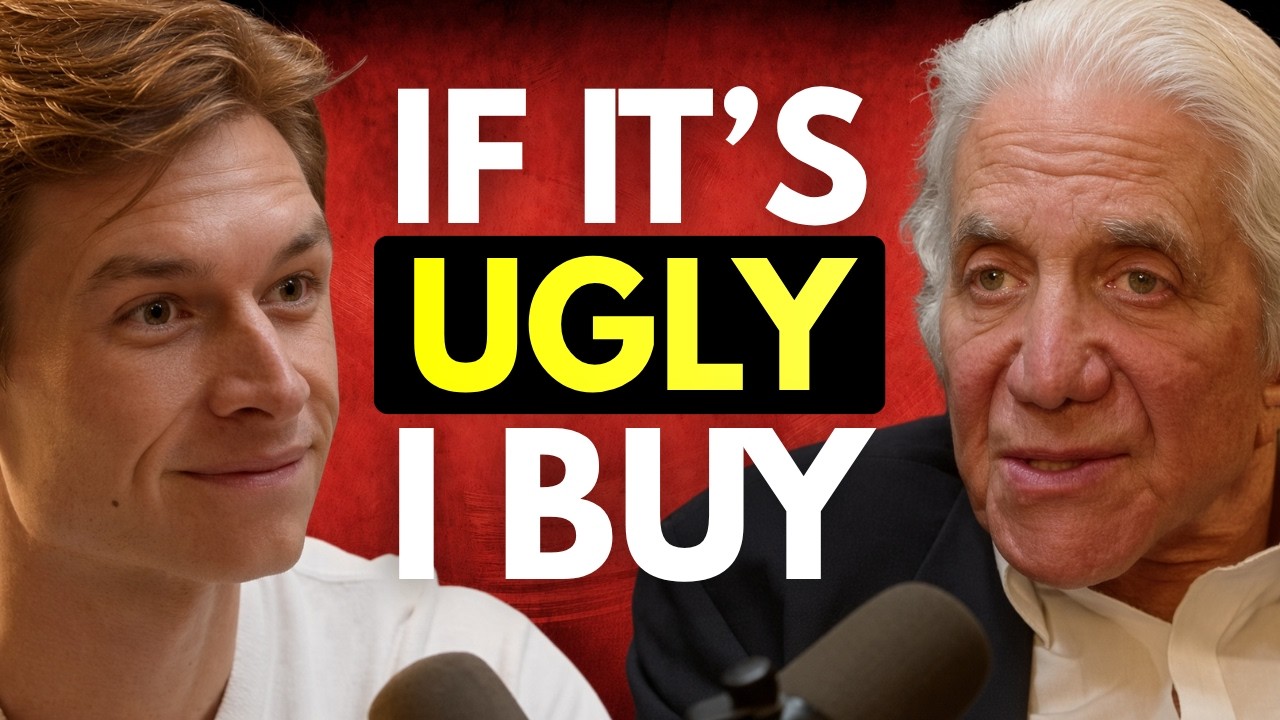
He Built A Real Estate Empire From Nothing (Here’s How)
John Ward of Turnstone Capital joins Taylor Avakian on the No Vacancy podcast for a deep conversation on decades in multifamily real estate, from early loan officer days to building and managing apartment portfolios across several states, including California, Arizona, and Texas.
Show notes
John Ward of Turnstone Capital joins Taylor Avakian on the No Vacancy podcast for a deep conversation on decades in multifamily real estate, from early loan officer days to building and managing apartment portfolios across California, Arizona, Texas, and Colorado.
John shares how he got started in the late 1970s, moved from FHA lending into flipping and converting small multifamily properties, navigated market cycles including the Global Financial Crisis, and scaled through high-net-worth investors, hard money, and institutional partners. The discussion covers finding inefficiencies in the market, relationship-driven dealmaking, current opportunities around ADUs in California (including a patent-pending elevated parking solution called Skybox), views on the Southern California multifamily landscape, working with international capital, and practical uses of AI tools for sourcing, analysis, and operations.
Chapters
- 00:00 Opening and company overview
- 02:03 Welcome and introduction
- 02:37 Turnstone Capital portfolio today
- 03:24 Starting out as a loan officer in 1979
- 06:32 Moving into flips and South Central deals
- 09:16 Forming the first Turnstone and converting 5-9 unit buildings
- 13:33 First larger apartment and shift to holding
- 15:50 Early capital structures and hard money
- 17:08 Pre-GFC activity and land deals
- 19:13 Navigating the Global Financial Crisis
- 21:16 Post-crisis single-family aggregation with Tricon and Colony
- 24:29 Returning to small multifamily acquisitions
- 25:17 Scaling with high-net-worth and structured capital
- 28:16 2018 growth and investor expansion
- 28:31 When passive income covered the lifestyle
- 30:06 Mindset around work, deals, “retirement”
- 34:23 Building relationships and people skills
- 37:08 Moving from friends-and-family to institutional capital
- 41:12 Current opportunities and the ADU angle
- 45:14 Skybox elevated ADU concept for parking
- 50:26 Views on California multifamily headwinds
- 52:38 Advice for younger investors considering California
- 57:00 Working with international (Japanese) capital
- 01:02:22 How the team uses AI today
- 01:08:07 Finding inefficiencies and what’s next
- 01:10:35 The FHA down-payment program story
- 01:14:05 Closing
Episode transcript
Transcribed from the episode's automatic captions, so some names and terms may be spelled wrong. Speaker names were also added automatically and may be wrong in places.
Read the full transcript
0:00 to 10:00
John Ward (0:00): I got two new really great ideas that I'm working on, an ADU solution and another invention. I've just got a new deal I'm putting together with a Japanese public company. And he looks at me, he goes, "When are you going to retire?" Like literally, it hit me with bricks. Like, retire? Like, I had even thought about it cuz I love doing deals.
Intro (0:13): John Ward is the founder and CEO of Turnstone Capital, an LA based real estate firm. He has personally sponsored over 600 projects from single family homes to multif family complexes.
John Ward (0:26): It was really kind of sketchy because they're all gangbangers. We only went there when there was a lockout and there were police because they were threatened to kill us. So, we kicked everybody out except one really nice black guy who lived in there. He ended up being the manager of the building and we remodeled the whole building and we rented it out and then we refinanced and we're like, "Hey, a man, you know, passive income. Like, why are we selling everything?" You have extremely latigious situation where what I would call schmarmy attorneys are going to tenants and saying, "Oh, you got fleas, you got this. Even if you don't have it, I'll find it and then we'll do a lawsuit." that is creating a lot of stress in the apartment market. If you're out of state, the multif family's got to be big enough to fly you there when it's screwed up and the property management company's screwing up and you got to go there a lot. So, a 20 unit building in Phoenix doesn't do it for me. One day I came home and my wife's like, "How was your day?"
John Ward (1:12): And I go, "It's just [ __ ] Everything's fucked." He goes, "Are you healthy? Am I healthy? Do we have two beautiful, healthy kids?" I said, "Yeah." She goes, "What else matters?" And it was like poof. You know, like it was the greatest like shock. get me out of my personal [ __ ] storm. I feel sorry for a person who goes into the office of an apartment broker and says they want to buy deals and the guy turns around and pulls up Co-Star and goes, "Well, here's the properties." And then they go and see you and you've got a aenic agent that's pulling up every opportunity everywhere.
John Ward (1:43): I'm like, "Here, how many do you want to see?"
Taylor Avakian (1:45): Yeah.
Taylor Avakian (1:46): Would you give advice to a young person who wants to start investing that California and SoCal is a good place to do it? Do you still believe that?
John Ward (1:52): Um, I believe
Taylor Avakian (1:52): Welcome to the show. My name is Taylor Avakian and I'm here with my esteemed guest John Ward. John, thanks for being here.
John Ward (2:03): Well, thanks for inviting me. Appreciate it.
Taylor Avakian (2:05): Be fun. I know. So, uh,
Taylor Avakian (2:06): hope I can live up to esteemed.
John Ward (2:09): You will, trust me. Um, from what I know about you already and the stories that I've heard, I think I think we won't have a problem with that.
Taylor Avakian (2:16): But, um, so, John, you have been in the real estate industry for a very long time. Uh, we've worked together on a few things. I love your team. They're super AI focused forward. You guys have a multif family uh portfolio in Los Angeles. Can you just give me a little color on where you are today? Like what what is the company? What do you guys do? Give me that whole thing.
John Ward (2:37): The company is Turnstone uh actually Turnstone Capital and um primarily we have apartment holdings. Uh we have 35 smaller apartments in California. We have a mix of small and I would say medium and one institutional in Arizona in Phoenix and Tucson. We have two apartment buildings in uh Houston and we have about five um subinstitutional uh properties in Colorado.
John Ward (3:11): Okay. And this started when about 45 years ago if I'm getting my math correctly. Well, this has had a lot of This has had a lot of iterations. Um,
Taylor Avakian (3:22): walk me in the beginning. What was
John Ward (3:22): Okay. So, so I uh graduated high school uh in 79.
John Ward (3:29): Okay. And um all I was into was playing volleyball. And I wanted to, you know, go pro and play with the triple A's. And I would go to the beach every day and play volleyball. And I was uh delivering sandwiches to make a couple of bucks living with my dad in Manhattan Beach. And I was delivering sandwiches here in Col in Century City. And I was dating a girl and her sister was dating a guy who was 24 at the time. And he had a 450 seal Mercedes. And um he was a loan guy. Like what does this guy do for a living, you know, had a phone in it, which maybe maybe the governor had a phone
Taylor Avakian (4:08): right at the time.
John Ward (4:08): So, oh that's Mike. He is a loan officer and has a loan company. And then then I met another guy who's actually still a friend of mine, um guy named Dick who worked for the guy and he was making pretty good money. I said, "Okay, I got to look into this." Well, Mike didn't really train me. Uh I would sit in the office. I'd go out in the field with him a little bit and his soliciting at the time was go to a Century 21 office in the afternoon, buy some booze, work, you know, hang out with the broker and the senior people drinking and and then he would pile everybody in a in a motor home and he'd pay for the whole office to go to uh Las Vegas for the weekend and then everybody would give him his FHA loans.
John Ward (4:53): And so I didn't have that kind of money. He was a good talker. He was a really good talker and communicate. Yeah. Good salesperson. So I got my box of cards a week later and I started running out in the field
John Ward (5:05): and the he had a business partner who had a kind of a a theory at the time. You call on 20 uh real estate offices a day. You talk to every single agent. You ask every agent for a lead, you know, like qualify somebody or if something you could work on, you got to turn down. You got this, you got that. and you'll get a lead a day which could turn into a loan a day and you'll make a h 100,000 a year. So
Taylor Avakian (5:28): that's the math.
John Ward (5:30): Yeah, that was the math. I was a pretty competitive guy
Taylor Avakian (5:32): and this was in the
Taylor Avakian (5:32): 79
Taylor Avakian (5:34): 79. So $100,000 and 79 is a lot of money.
John Ward (5:36): It was good money. Yeah. So I pretty competitive and if he said call 20, I called 30 or even 40 a day. And you most of the time there's no one in the office at 8 in the morning and there's no one there at 6:00 or 7. So, I'd flip my territory and I'd go to these ones in the morning on uh Monday and I'd go all the way through the day and then Tuesday the other direction, then start in the middle, go this way and this way. Anyway, so I could see every single agent and as you know, when you're busy, you don't do the same followup with your clients as you do at the new hungry person. M so I would be in there running around and I'd get leads and within about a year and a half I was like the top guy in the whole company and I was winning summer sales contests and everything and I never looked back and then gradually back in the day there were a lot of people you know buying and flipping.
John Ward (6:26): I was mostly in South Central LA
Taylor Avakian (6:30): doing these FHA loans.
John Ward (6:34): Yeah. Doing FHA loans. I started out in San Pedro in Wilmington because that guy Mike was really in LA and Englewood and wanted that territory because it was a good FHA area and they stuffed me where there's almost no FHA business. But as I began to prove myself, they realized maybe we better put this guy up there. So he put me in the east east side and then I gradually worked my way west and started to get a good territory, you know. And I only did FHA loans, occasional VA. I would turn down a Fanny May Freddy Matt because our specialty was FHA and you can make the most amount of money on points and fees whatever
John Ward (7:10): through that
John Ward (7:10): and the easiest highest percentage of closing. So back in the day, South Central and and still probably caters to people of a lower socioeconomic level
John Ward (7:22): and and that comes credit problems, instability, source of funds, all the things that a loan officer has to look together. So, I got pretty good at putting together loans. I knew what to have the underwriters look at uh upfront, and that was the beginning. We were the go-to guys. I had a business partner who did loans with me, and we were the go-to guys for people who were flipping in South Central.
Taylor Avakian (7:47): How did you get in contact with the flippers? So, was that a niche that you identified?
John Ward (7:50): You fall into that backwards. So, first of all, the most aggressive agents are dealing with the flippers because the flippers need to sell their stuff. Got it. So they're with the most aggressive agents and so you're going after those agents because they're doing the most business. And then the seller will look and say, you know, the loan fell out when it was with ABC loan officer, but it was closed with John. And so they would say, hey, you know, give the loans to John. And then we began to meet these people and all of a sudden, you know, maybe it's mid80s and I'm looking, well, like I can buy a a $60,000 single family in South Central and do a rehab and sell it for 80,000 or 90,000 and make 25,000 and I'm doing a loan and I'm making 3,000 and 4,000 or whatever.
John Ward (8:37): So, we started doing some flips.
Taylor Avakian (8:42): And this was with your own cash, you and your partner.
John Ward (8:43): That was when Yeah, we built up some cash by then. were producers and we started doing flips. And also hard money
Taylor Avakian (8:47): was not quite as easy it as it is now,
John Ward (8:54): but it was not institutionalized either. And so the hard money people that were out there, you'd make a relationship. They'd always undercut your appraisal. You knew they were going to do that. And they would just, it was just kind of you apply for it. Here's your business plan. Here's a model and we'll give it to you. there was like no qualifying and
Taylor Avakian (9:12): it was pretty easy.
Taylor Avakian (9:16): Yeah.
John Ward (9:16): And so we started doing some flips and um in ' 87 we formed the first Turnstone uh me and a guy named Don and we brought in our first partner named Kurt and he was construction guy and he he quit a job and he wasn't doing anything. We're like come on dude run this company because we're still loan officers.
Taylor Avakian (9:34): Ah
John Ward (9:37): yeah. And so we were doing loan officers and I think I told you this.
John Ward (9:42): I wanted to kind of teach Kurt how we sourced deals and how we looked at deals. And I met him over at uh what was brand new at the time, Hennessy's on Pier Avenue in Hermosa Beach. And we sat down and we had MLS books cuz nothing was on the internet. And I take the book down and I'm showing him like here's 4,000 square foot board up, you know, five units and it was near SC. And I looked on this in the book and I look and on the same block there was a 4,000 foot four unit and they're asking 70,000 more bored up dilapidated and I look and my finance brain clicked on. And I realize the 4unit is supported by low down payment, FHE, VA, conventional financing, and the five unit is 30% down, debt coverage, experience, all these things.
10:00 to 20:00
John Ward (10:30): Plus,
John Ward (10:34): five unit lenders
John Ward (10:34): wouldn't loan on a board up.
Taylor Avakian (10:38): Got it.
John Ward (10:38): Right.
Taylor Avakian (10:39): Yep.
John Ward (10:39): So, I suddenly thought to myself, okay, here's an opportunity. And you know, like you get these ideas every once in a while. And we ended up buying probably 200 of these. And we'd buy five, six, seven, eight, and even a nine unit board up empty. Or if there's one or two people in, we kick them out.
John Ward (10:56): And then we'd by permit convert them down to four units. So you take two ones and make a 32, the kitchen and the living room become another bedroom, you know. Wow.
John Ward (11:07): Yeah. And at first they were lit. We call them mousetraps because we'd open up the closet from one unit to the next. So you go in the front door through the closet into the other, you know, like it was crazy, right? the layout. You were just literally doing whatever you could.
John Ward (11:21): We got better at it. And the cities because you're converting them down, it's a reduction of density. And they're like, "Yeah, do this. Do this. No problem." We'd even the the the five unit or sixunit gas rack would still be on the building even though the rack's there only there's now four units like four gas things, right? And a lot of people would buy them and then close them back up and put the rack back on unpermitted and they'd have a five unit again. Like it was really kind of wild west back in the day.
Taylor Avakian (11:52): And this is before now with SB the Senate bills. You can't take rental units.
John Ward (11:58): You can't take them off. Yeah. You can't Well, I mean, you got rent control. You got to buy people out. Like it's a it was a whole even in LA city we would take a unit off the market and we didn't have to pay rent control or reload and especially if it's a board up you just take the unit off the market and away it goes. Now it's a 4unit.
Taylor Avakian (12:18): Wow.
John Ward (12:20): Yeah. It was a whole different time.
John Ward (12:20): Jeez.
John Ward (12:23): So we we'd rehab these we'd end up with large four-unit buildings and then you know we we're loan officers. We know all these real estate agents. So, we go to the best agents with our nice long list. Here's 40 properties. They're all renovated, about $300,000. You make a full 6%. Bring me the buyer. You make the $18,000. And the agents go batshit crazy for this.
Taylor Avakian (12:46): Yeah.
John Ward (12:48): And you know, like I told you, your your strengths are your weaknesses. So, we're sales guys and we're pitching this out all over because what are these agents doing? They're all going to the other flippers and go, "Look what Ward and Evans are doing. you know, buy five and six and seven units and convert them down to four units. Very quickly, that differential in price disappeared because everybody was chasing the same product. Figured it out.
John Ward (13:11): Yeah. Yeah.
Taylor Avakian (13:11): Interesting.
John Ward (13:12): So, it was a good run. It But it taught us one renovating.
Taylor Avakian (13:18): Yeah.
John Ward (13:18): It taught us all about the financing. It taught us all about the sales. And more importantly, we didn't know it. We had 55 to seven unit buildings and we're learning property management.
Taylor Avakian (13:33): So you were managing all these yourself.
Taylor Avakian (13:33): Yeah, we're just, you know, evicting tenants, doing just three guys, you know, running a rehab building, right?
John Ward (13:40): So out of nowhere, a good friend of mine who was a Long Beach real estate agent said, "Hey, there's a a 16 unit," and this was in um like ' 89. There's a 16 unit on Elm in Long Beach and it's just completely gangfested. Terrible. I think we bought that for like 20,000 a unit. It was a bank. Yeah, it was a Wells Fargo. Remember Wells Fargo? Y
John Ward (14:03): it was a Wells Fargo REO and we bought the building and we kicked everybody out. It was really kind of sketchy because
John Ward (14:10): they're all gangbangers and we we only went there when there was a lockout and there were police because they were they were threatened to kill us.
John Ward (14:18): Holy crap.
John Ward (14:20): Yeah. So we kicked everybody out except one really nice black guy who lived in there like didn't like all the action. He ended up being the manager of the building and we rem remodled the whole building and we rented it out and then we refinanced and we're like well wait a minute you know passive income like why are we selling everything? Mhm.
John Ward (14:39): So we started a company called Property Works at the time and that was buying apartments and renovating and then we still had the flipping business. So we went through
Taylor Avakian (14:52): this is one of the coolest partnerships that I've done because this is an idea that I had and they had already created it. So I said, you know what, let's partner and do it together and sponsor the podcast. 90% of the Fortune 500 insure through a captive. So do the largest apartment owners in the country. Here's how it works. Owners hold equity in their own insurance company, buy reinsurance at bulker rates, and keep the unused premium when losses come in low instead of handing it off to a carrier. Rates drop up to 30 to 35% with dividends on top. So until now, that was closed to the giants. Real Property Captive opens it to owners with portfolios from 100 million to $3 billion. And they're middle market owners themselves, building this for their peers. Build for owners by owners. Go to rpcaptive.com.
Taylor Avakian (15:37): That's rpcapive.com. Were you when you did the property works, were you guys raising money or because all through this the 80s you guys were using your own money or were you syndicating family and friends?
John Ward (15:48): So for the flipping side it was all of our own money. Okay.
Taylor Avakian (15:52): The apartment side really quickly if you don't come from money you run out of your money.
John Ward (15:58): Yeah. And so the first few deals, the hard money lender that um was loaning on the other side came in and we did a 50/50 deal with them where they came up with 100% of the down payment
John Ward (16:12): and then we owned 50% and they owned 50% but our 50% of the money they came up with was a loan. We had to pay them back and they got a return on that money and then so it was a loan against our LLC shares.
Taylor Avakian (16:29): Got it. Interesting.
John Ward (16:31): Yeah. So we set that up and we're buying those deals, you know, pretty much with no money.
Taylor Avakian (16:35): Yep.
John Ward (16:36): Um but they own 50 actually, you know, technically secured 100%. But we'd buy our 50% and then we'd get and our cash flow would go to pay the loan, which was kind of cool. And then um we'd b pay off their money. We own 50% of the building. Yeah.
Taylor Avakian (16:53): Jeez. Okay. So, then you guys start doing these apartment flips or see these these apartment renovations and refinancing. And is it a slow process or is it cuz were did you like what was the business plan, I guess, when you started doing this?
John Ward (17:08): I mean, the plan was do as many real estate deals as you could possibly do. And we were like busting at the seams doing, you know, we'd have 50 flips going at any one time and we're buying the apartments and doing whatever. And this was all before the global financial crisis. So we were killing it and buying apartments, renovating apartments, refinancing, doing the flips, generating cash flow, and it was really fun. And about I want to say 2000 late five.
Taylor Avakian (17:44): Okay.
John Ward (17:44): I just got this uncomfortable feeling that the prices could not substantiate. Somebody called me for a duplex in deep south central LA and I think it was 430,000. And I had purchased three years earlier a duplex a block from the beach in Hermosa Beach for 436,000. And I just looked and I said, "Okay, something's crazy." The good news is we got out of the flipping business.
John Ward (18:15): The bad news is we started doing land subdivision and we were buying the land with our equity in our apartments. So when the global financial crisis came, we were um entitling dirt. It was great. I'd buy five acres and turn it into 20 lots and sell it. Just paper it.
Taylor Avakian (18:38): Got it. Just the paper.
John Ward (18:38): Just the paper. And then we'd sell that to a developer. And of course when the GFC hit, dirt was worth dirt.
John Ward (18:46): And LAR sold I don't know 50,000 lots for 5,000 a piece. Like and we had it was worthless. So, we had to keep selling all those apartments and we almost had to sell everything down to nothing just to pay off all of this land.
Taylor Avakian (18:59): [ __ ] So, you built up a portfolio and the GFC basically wiped out
John Ward (19:02): almost all of that went. I kept some stuff out of state, but all the apartments in California went. Yeah.
John Ward (19:10): Holy [ __ ] What was going through your mind when that was happening? you know, um, every like we had a lot of personal guarantees and every day was an attorney call was somebody threatening to take my house and do this and do that.
John Ward (19:26): I did some creative things, some, you know, friendly seconds and things like that, but it was extremely stressful. And one day I came home and my wife's like, "How was your day?" And I go, "It's just [ __ ] Everything's [ __ ] every call is somebody threatening me like I'm just over this and she gets right in my space in my face and she's never never like gotten this and she gets in my face she goes are you healthy I'm like yeah like what does this have to do with anything she goes am I healthy I said yeah she goes do we have two beautiful healthy kids I said yeah she goes what else matters and it was like poof you know like it was the greatest like shock. Get me out of my my personal [ __ ] storm that I was in.
20:00 to 30:00
Taylor Avakian (20:14): Oh my gosh.
John Ward (20:16): Yeah, it was awesome. It was awesome.
Taylor Avakian (20:16): So epic. She's
Taylor Avakian (20:20): I know, right?
John Ward (20:20): Yeah. Yeah. She knew that's what you needed.
John Ward (20:23): Yeah. So, you know, you get over So, um when the global financial crisis hit, properties were at 50% in California. And I kept looking at people going, "This is the greatest investment that you will ever see in your lifetime. We got to buy." and everybody, you know, like the stock market was down at 10,000 and everybody's holding on to their they're white knuckling their cash and nobody's praying. I'm like, trust me, oh, properties will never get back. It'll never come back, right? It's going to come back. They'll never come back. And then, oh, and by the way, um, Bergkshire Hathaway, uh, uh, Warren Buffett literally was on CNBC and he goes, you know, this all these low market properties I think is the best investment in the country. I just can't figure out how to manage it if we were to buy it.
John Ward (21:10): You know, one house, one ounce, one house. He said that. I'm like, hello people. Listen. And then I started hearing that vice presidents at Colony Capital are going home and going on the MLS and looking up REOs and buying REOs. And I'm like, hm. So, we were pretty set up. We sourced, we renovated, we managed, and we could hold these properties. We know the market, we can sell, we could do everything. And about the same time, we were introduced to Tricon Capital, who we all know was eventually uh purchased by Black uh Stone
John Ward (21:52): and uh by Colony Capital
John Ward (21:58): and they were both aggregating. And we did a deal with Tricon to aggregate single families. And it was the typical hedge fund 2080. They'll come up with 3 million a month. We'll put up 10 or 20% of it. And then we did a deal with uh Colony to do the same thing in the same area except Colony Triricon would only buy a six cap,
Taylor Avakian (22:20): okay,
Taylor Avakian (22:24): or higher,
Taylor Avakian (22:24): okay?
John Ward (22:26): And Colony would go down to about a five cap. So they both knew that I was sourcing for both of them. and Colony was like a a purely a fee deal. It was we'll pay you to buy it, we'll pay you to renovate it, and we'll pay you to manage it. And so we were just buying single families and it was great. And um built a portfolio and then um both of them securitized at the same time. Colony form Colony American Homes and Trion did Tririccon American Homes and Tririccon bought us out which was great. They had a little capital infusion
John Ward (23:03): and Colony actually securitized and they basically told the world that they were managing everything which they were except for our properties cuz they were tough. We were a quote sub manager and I remember we worked with Arlene up at the up at Colony American Homes and it was a good deal and then eventually they're like hey we got to take this over and we had a good run with both of them.
John Ward (23:27): Wow. And then in about 2014, I looked around and you know, I've always I've been in real estate mostly, but I really I'm like a deal guy and I look for inefficiencies,
Taylor Avakian (23:37): right?
John Ward (23:40): So, when we were buying the single families, we could out pace anybody because we had the money ready to buy it. So, I could put in a 30-day asis. We're going to close. Shut the [ __ ] up. Give me the deal. and all the brokers would want to bring us the deals. So then we went out and we started looking and I realized that small apartments from five to 25, no institutions want them.
Taylor Avakian (24:07): It's only mom and paws.
John Ward (24:10): And I could do the same thing. I could go to the brokers. I'd go to you and I'd say, "If you're going to get a listing, give me the address. You let me know what the whisper price is. I'll let you know if I can buy it or what I can't. It'll be all cash. No retrade. 30 days. Let's have fun. And we started buying apartments.
Taylor Avakian (24:28): Wow.
John Ward (24:30): And and it was really fun. And I think in
Taylor Avakian (24:33): Was this your own capital?
John Ward (24:33): But I started bringing in investors. I'll tell you about structure in just a minute. But so so yeah, with our capital and with bringing in high netw worth investors
John Ward (24:43): and we didn't have experience at first. So the first one I'm bringing in like broker guys that you probably know that are also syndicators and like we're doing 50/50. We'll find it, manage you, put up the money, blah blah blah. So then we got a resume and then they'd start loaning to us. And then we started doing hard money. So there's a lot of these companies local that are like 8%, you know, two points and they'd go on apartments. And um we started buying those and we'd get, you know, 65% of of value, but maybe 80 or 75% of purchase. So we get the leverage. Yep.
John Ward (25:15): And we just started buying and buying and we went from like one or two a year to five or six a year. In 2016, we we bought 16 apartment buildings. Smaller.
Taylor Avakian (25:27): Yeah.
Taylor Avakian (25:30): But 16 apartment buildings. Yeah.
John Ward (25:30): And so the hard money lender, they were 8%. I could have got way lower rates, but there's no third parties. I gave them my model and they accepted my number. they knew I was going to perform and they'd say, "Yeah, I'll do that loan amount." And I knew their numbers. So, I would, you know, my job is to know their job better than they know their job.
Taylor Avakian (25:54): We can pay this amount because of this and this and this.
John Ward (25:56): So, um, we're just doing deals and it was high net worth investors and it's 500 grand or a million or 700 grand or 350 or whatever. And then this company realized, I guess they hadn't had this problem before, but one borrower cannot have more than x% of their entire fund.
John Ward (26:12): And all of a sudden, they said, "Oh my god, we've gone over our fund limit. We're going to be selling our loans to a company called Aspen Capital. At the time, they were a $6 billion fund just outside of Portland." I met them, they met me, blah blah blah. and we're sitting in there and I said, you know, thanks for buying these loans and keeping the gravy train going. Said, I wish I could work on equity. And they go, well, that's what we do. And I'm like, but these are small checks. He goes, we build our whole process. So, we came up with a pretty cool thing where the senior lender would do a first of 65%.
Taylor Avakian (26:49): Okay.
John Ward (26:49): Aspen would do a second, a 13% interest that would go up to 85%. So, another 20%. and I would raise the other 15%. So, Aspen's 13%. Second, when I've finished my renovation and I've raised my rents and I refinance through the local bank or whoever I use, Aspen had to be paid off a h 100,000 out of whatever their principal balance was. And then they would convert to a preferred equity piece, 6% current, 13 total, just like pref.
Taylor Avakian (27:22): Wow.
John Ward (27:24): Yeah. So all of a sudden my high net worth like I would send out a deal on Sunday saying, "Oh, here's the, you know, it's a 15 irr. We need 400,000." Cuz the amount went way down.
John Ward (27:36): And I'd fill that thing up by Monday morning at, you know, 8:00. And then everybody's like, "Wait, it filled up so fast." Like I'm like, "You got to get on there." And so we just started bam, bam, bam, bam. It was really cool.
Taylor Avakian (27:47): Oh my gosh. And this is like 2016 to
Taylor Avakian (27:52): 2016 2018. Yeah. Oh my gosh.
John Ward (27:52): Yeah. Um and then in 2018 we ended up buying,00 units. We bought some bigger buildings out of state.
John Ward (28:04): Um and that was great. And then we needed to kind of increase our you know little family office and high net worth and and Aspen wouldn't go out of state. I was really disappointed in that. So that ended but that was kind of a fun run.
Taylor Avakian (28:15): Wow. You know
Taylor Avakian (28:16): when um when during your career did you feel like you had made it? you had been like you had made enough money where you could take care of your family. You weren't worried about where the next paycheck was coming from. When was that moment for you?
John Ward (28:30): You know, I've had ups and downs. I had that moment before the global financial crisis.
John Ward (28:36): During the financial crisis, I literally my house in Manhattan Beach is a duplex. I was living downstairs in the two-bedroom with my family and rented out the upstairs to like live, right? Yeah. So, I've had ups and downs, but I got the confidence that my passive income would pay for my overhead and everything else would be gravy probably in about 2014 or so because the apartment, some of the apartments that I was able to keep through the GFC were cash flowing, whatever. And then I knew that if I, you know, I just pay for my vacations or do whatever I want to
Taylor Avakian (29:16): through the rest. And how old were you in 2014?
John Ward (29:18): Well, what I was born in 60. So what is that? That's uh 54.
Taylor Avakian (29:23): 54. Yeah.
Taylor Avakian (29:23): 54.
Taylor Avakian (29:24): Yeah. So I'm 66 now.
Taylor Avakian (29:24): Okay. So I mean the reason I ask is because it feels like I talk to a lot of I'm I'm going to be 30 next week. So uh I talk to a lot of people my age and a lot of people younger than me and they feel like they're behind the eightball. They feel like, you know, I I'm I'm making six figures, but the cost of living is so high. I can't buy a home. I can't do all this stuff. Like, you know, sometimes they feel like their paycheck paycheck to paycheck. And everyone I talk to wants to go get that passive income, wants to go get that safety net or whatever it is, or they want to go do a startup and have an exit and and have this windfall or whatever. And I think we're the type of personalities, too, where even if you had enough money or you felt secure, you would still want to work because
30:00 to 40:00
Taylor Avakian (30:06): still want more. It's just the who you are, right? It's that
Taylor Avakian (30:10): I mean, just I I'll touch on your question because my 30th birthday was literally black roses. I literally had told myself because I started in the mortgage business at 19, right?
John Ward (30:20): And I was making good money, but I was throwing it around. And by the time I was told myself, I'll be retired or able to retire at 30. And you know, I wasn't anywhere near that, right? So that's like uhoh, I'm still working. Yeah.
John Ward (30:33): And um about I don't know 5 months ago I was coming off I do a beach workout with a bunch of buddies and I was coming off the beach and it was a really good friend of mine. He's my age. He's a paddler. He was taking his paddle board off his car and I'm like hey Bill how you doing? And he goes, "What are you been up to?" And I said, "Well, you know, we're fighting a battle in some of the apartments with the lenders and um and but I got two new really great ideas that I'm working on. an ADU solution and a another invention and I I' I've just got a new uh a new deal I'm putting together with a Japanese public company. And he looks and he goes, "Well, when are you going to retire?" And like literally it hit me with bricks like retire?
John Ward (31:18): Like I had even thought about it. Like cuz I love doing deals.
John Ward (31:24): Like if I wake up and I'm creating something and there's an opportunity to to fill a void somewhere like That excites the [ __ ] out of me. So, I'm 66 and as long as I have the energy, I want to keep doing deals. I love deals.
Taylor Avakian (31:39): This episode is sponsored by Loan Titan, a leading residential financing loan company specializing in both conforming and non-conforming mortgage solutions. Loan Titan offers Fanny May, Freddy Mack, NonQM, and private money hard money loan programs helping borrowers who need flexibility beyond traditional lending guidelines or speeddriven financing solutions. Whether you're purchasing, refinancing, or investing, Loan Titan is known for smart structuring, clear communication, and reliable execution. Visit loanitan.com and mention Taylor Avakian to get started. Thanks for Loan Titan for supporting the channel. It's It's funny you say that because I feel the same way and I've talked to enough really successful people and been around them enough [clears throat] where that is who they are. It is not this get to a destination point and then they're just going to coast and cruise.
Taylor Avakian (32:26): Like you almost have to have the personality of someone who will never stop because you love the process and you love what you're doing from a day-to-day perspective. There's almost this obsessive this deal junkie. You've heard that people are deal junkies, right?
Taylor Avakian (32:41): Where that that is inside of you, which is I think is people say, "Oh, how can I be successful like that person or how can I learn that?" Right?
John Ward (32:48): It's like today it's so tempting, you know, oh, I want to be an influencer. I just want to make money. Making money starts slowly. First of all, you got to save and you have to sacrifice. And I don't want to sound like a kagon, but if you are doing everything that all your friends are doing, you're going out every all weekend long, you're buying $7 lattes, you're going to Las Vegas, you're going here, and you're spending your money, and you're not saving money. When an opportunity comes along, you're not going to have the money. And because you've never done an opportunity, no one's going to invest in you. So take a few opportunities and put them aside and save money. It's very important to save money. And and by the way, they all the financial advisors say compounding.
John Ward (33:37): Compounding is the most amazing
John Ward (33:41): thing you can possibly do. If you have a 100,000 in the bank and you make 20% in the stock market, now your 120 is making 20%. It's it's a no-brainer, right? So definitely delayed gratification is what I would tell people. Yeah. And if you are not studying AI and listening to every AI podcast Yeah.
Taylor Avakian (34:02): and getting familiar with agents
Taylor Avakian (34:02): now you're absolutely batshit crazy because you can do any idea that you have
Taylor Avakian (34:12): you can create.
Taylor Avakian (34:12): Yeah.
Taylor Avakian (34:14): And do
John Ward (34:14): Yep.
Taylor Avakian (34:16): All yourself.
Taylor Avakian (34:16): Yeah. It's incredible. We're going to come back to AI because I know that you are as nerdy as I am at 66 which I love. I'm definitely not
John Ward (34:23): I don't know about that. I don't know about that.
Taylor Avakian (34:26): But I want to talk about because um someone on your team is a good friend of mine and I asked him I'm like what should I talk to John about or what makes him unique? And he told me that you are one of the best people person people people person relationship builder that he's ever seen. You're so [clears throat] good at building relationships and connecting with people. Do you feel that's true? Do you feel like what what what makes you so good at connecting with people?
Taylor Avakian (34:54): Well, I'm I'm pleased that he said that. That's David, right?
John Ward (34:58): Yeah. Yeah.
Taylor Avakian (34:58): Yeah. I think connecting with people is partly you have it or you don't.
John Ward (35:03): But if you have it, it's a trained skill. And I think you have to have empathy for the smallest little things. So, I'll give you an example. I had a loan processor whose name was Christine. And the CEO of the company, she worked there. We worked there for 5 years together. And the CEO of the company until the day she left called her Kristen. And when I hear a name, I ask, "How did you pronounce that?" Because when I'm talking to that person,
John Ward (35:41): now I might not remember their name right away because I'm bad with names, but when I'm saying their name, I want to say it the way they want to hear it said.
Taylor Avakian (35:50): Yeah.
John Ward (35:51): And I treat people that way. I don't I'm not caught up with people who have money. I've got a friend who just built a 265 ft boat and right now they're on the coast of right near Portoino and I have no desire to go on the boat. I treat the janitor with the same respect as I treat the principal of the school. The janitor was made in God's image and the principal of the school was made in God's image. They're both equally interesting people. If they have good values, that's what's important to me. And so I try to get to know people and I try to talk about what's interesting to them
Taylor Avakian (36:30): and then they care about what's interesting to you,
John Ward (36:34): right? And so it's just always been a thing. And and this is gonna be be almost embarrassing to say, but back in the day when I dated a lot of girls, the easiest way to get close to a girl is be completely interested in them the whole dinner, right? And and that's it's no different whether you're trying to get a girl or trying to get an investor or whatever. It's like if you're not interested in them and you're only invested interest in yourself, like they'll sense that.
Taylor Avakian (37:00): Totally.
Taylor Avakian (37:02): So interesting.
John Ward (37:02): Uh it's just Yeah. is be interested in the people that you're communicating with
Taylor Avakian (37:08): and then naturally this is how the world works which I want to circle back to you mentioned colony and then the Blackstone group [clears throat] so eventually you started doing the hard money stuff the agents were there you had to take a step up from the family and friends to going towards institutional how does someone who is in that phase of their life maybe they're doing family and friends money and they want to go to do institutional they want to get bigger and grow faster. How do you get in the rooms with those people? How do you What's the story you have to tell to be able to convey to that person, take a chance on me, this is what I'm going to do, or is it the numbers work, here's the story, black and white. Like, how does that step happen?
John Ward (37:50): First of all, the numbers always have to work and the institutional person is going to know right away if the numbers are wrong, whereas the high net worth might not always. The high net worth is sitting down and going, I invest in you cuz I like you and I trust you and that's great.
John Ward (38:08): The institutional person, the numbers have to be right and you have to speak in their language. So if you're talking to a high net worth, it's a cap rate and maybe an annualized return, which is like an IRR. And if you say irr to a high net worth, you got to explain, do you know the difference between annualized and irr? And they'll say, well, not really. Mhm.
John Ward (38:32): They don't want to admit they do and it's just time value of money, but it's just like an annualized return. Okay. But if you're talking to an institution, it's going to be a a yield and it's going to be a multiple. It means the same thing, but they speak in a different language. So, first of all, you got to know the language and you've got to know your numbers. But the most important thing, and I think it comes through when I talk to people, is you've got to be excited about what you're doing. If you sit back and you're like, "Yeah, I I I'd really like you to invest with this deal." And uh you know, uh and they've got to pull the information out of you, they want to see you excited about it. And you also have to be prepared that you're going to sit down with 20 and you're going to get 20 nos.
John Ward (39:15): And every no is an opportunity for you to get better about presenting to get to yes,
Taylor Avakian (39:25): right? And so I would say that try to have a warm lead.
Taylor Avakian (39:29): Try to come in through some sort of a side door. Know your numbers. Know the weakness of your numbers. Know where you can test the numbers.
John Ward (39:38): First thing they're going to look at is, okay, so you'll be at a five and 3/4 cap rate. Well, what happens if the interest rate is seven or what if the cap rate is four or or or you've got to know what if you have a 85% occupancy? when does this thing go to negative? If you don't know those numbers, the institution will blow you out. So, know your product. Don't be overly competent, but be excited, be motivated,
40:00 to 50:00
Taylor Avakian (40:05): right?
Taylor Avakian (40:05): And be able to speak their language.
John Ward (40:08): And by the way, with AI, you can look up all of that.
John Ward (40:12): Right.
John Ward (40:12): Right. A meeting with Colony Capital. What's the difference between a high net worth? What should I say and not say? It'll tell you.
Taylor Avakian (40:17): It's easy.
John Ward (40:19): It'll give you the trainers. Okay. You be Colony Capital. I'm going to pitch my deal. Well, you were slow and stupid. Right.
Taylor Avakian (40:26): Right. Oh my gosh, it is incredible.
John Ward (40:26): It's amazing. Yeah.
Taylor Avakian (40:29): What you can do today to prepare for this stuff. And it's instead of going and being like, what do I do? Just ask. It's like
Taylor Avakian (40:34): ask what to do
Taylor Avakian (40:34): now. Instead of googling it, just chat it.
Taylor Avakian (40:37): I don't know how to do a prompt. Well, ask it how to do the prompt. What's the goal?
John Ward (40:41): Exactly. Metaprompt. Yep. I see. You do know. You do know a lot, John. Me.
Taylor Avakian (40:46): I love that. So where do is there any opportunities today that you see as [sighs and gasps] that next thing that next potential opportunity for someone who's young or hungry or even old and hungry um or experienced and hungry? Is there an opportunity that you see where if you put in the effort and the time and can can really like put that sweat into it that you can make something from it? Is there an opportunity that you can make something from
Taylor Avakian (41:14): in the real estate in the real estate business and in real estate deals?
John Ward (41:16): Well, yes. Um, I think even though there are thousands of people chasing the opportunity, I think the ADU opportunity in California to buy properties and add ADUs, if you do it right, is an awesome opportunity. And people ask me all the time, well, how'd you get into flipping? You know, how do I get into flipping? I have two answers. One, go meet a flipper and tell them you'll work for free and learn their business. But it is really easy to look at what the cost is of a prefab ADU and put behind a single family residence. And if the single family residence is selling for, you know, it's a thousand square feet selling for $800,000, that's $800 a square foot and you can put an ADU behind that and the smaller property is going to be a higher per square foot.
John Ward (42:19): It's easy to know the math.
Taylor Avakian (42:19): Mhm.
John Ward (42:21): And you can do that. Then you get go to friends, friends and family and raise the money, put it in their name.
Taylor Avakian (42:25): Yeah.
John Ward (42:28): And they'll only pay you the money if you succeed. like it's you can get I think the ADU world is not saturated and uh people are all in their silos and I think there's an opportunity for people to to do that and not the complicated no no lot split this that you know get away from that like buy a single family or a duplex put an ADU behind it and get the hell out quick
John Ward (42:54): and do it and you say for sale for sale product sell that thing how do you determine whether uh something makes sense to flip or to sell versus hold on to it long term and have that cash flow appreciation kind of do you look at specific assets make more sense to hold long-term versus selling? My um answer to that used to be uh you know multifamily is for holding and if you're out of state the multif family's got to be big enough to fly you there when it's screwed up and the property management company's screwing up and you got to go there a lot. So a 20 unit building in Phoenix doesn't do it for me. Now, if I have a 100 and a 200, then I can buy 330s because I can pay for them to go.
John Ward (43:40): Yeah.
John Ward (43:40): But a 20 unit out of state is a problem because you're going to have to go manage that thing if somebody screws up on it. So, used to be multif family.
John Ward (43:47): Almost everything we do now, we have dual strategies.
Taylor Avakian (43:53): Okay.
John Ward (43:56): Okay. Our goal is to buy it, renovate it, add to it, and sell it. But if we can't, what's the cap rate? What's the return on cost? And if it's not above market, then it's not a good deal anyway.
Taylor Avakian (44:09): And so I always try to have dual strategies on everything. What ifs.
Taylor Avakian (44:13): Mhm. So if you're protected on the downside risk of the A plan and the B plan,
Taylor Avakian (44:17): so I asked you to talk about my deal on in Venice on six. Y
John Ward (44:20): Okay. That was always a sale sale. Well, we bought it when interest rates were five, four,
John Ward (44:30): and cap rates were five and four and then cap rates were higher and we couldn't sell it. So, we refinance the property
Taylor Avakian (44:38): and we're holding the property, right? And we'll wait until
Taylor Avakian (44:41): the market makes sense. Yeah. Because you can
John Ward (44:44): as long as we have to. I got investor money in there and I'm going to get their money out.
John Ward (44:46): Yep. Exactly. Yeah.
Taylor Avakian (44:48): Um you so we talked about ads a little bit which clearly that is something that you have been putting a lot of ideas and thoughts behind. You want to tell me about this company skybox that you created and you told me about it and I was like cuz I know a lot of companies doing the ADUs but there's this creativity around the way that you're approaching it and there's some some patent pendings I'm I'm I'm believing. So you want to tell me how Skybox was created?
John Ward (45:13): Yeah. So, uh, we have the 35 properties here in Southern California and, uh, I talked to you about my controller, Wes. He's very bright, uh, person and he's also extremely entrepreneurial. And one day he comes to me and he says, "Ah, John, I got this idea I've been working on where we can, uh, elevate ADUs above the parking at our properties and we can add, I don't know, 50 units or something to our apartments." And I'm like, "What the hell?" And I look at it. I'm like, "Okay, dude. I need a little bit more information. Come back to me, whatever. So about two weeks later, he presents this thing to me and I'm thinking about our adding value to all of our apartments, which by the way is not an easy thing because each one is a separate different investor group. They're going to have to come up with money or I'm going to have to refinance or whatever.
John Ward (45:59): So it's not 100% easy for us to do. Although about three of our projects we're probably going to do this on. Anyway, he presents this to me and I said, "Wes, like I think this is a business. I think this is something that we can do and offer to apartment owners." And essentially he has come up with a a rack system that will go above parking that we've designed with structural engineers to value engineer because that kind of thing can get extremely expensive. and we patented, we got a patent pending on it. And we'll take uh pre-fabricated ADUs that will go on top of this rack. And I can't preserve 100% of your parking.
John Ward (46:45): Sometimes I can because parking lots aren't always efficient. Um, but I can preserve the majority of it. And the problem for apartment owners is you can go and slap a bunch of ADUs in your parking lot. You're probably getting you're charging for those spaces, so you lose that income. All of your tenants rented that because you had parking. They don't want to walk down the street and park. So, it's a huge disruption to an apartment. I own 24 units on Chestnut in Long Beach. It has no parking and it has very high turnover
John Ward (47:18): because nobody wants to carry their dro their groceries up the block to get in the apartment. So you degrade the value of your existing apartment unit and you do add income but apartment owners are not doing it and there's a reason.
Taylor Avakian (47:33): So this is a solution for apartment owners where you can preserve your parking and add the units
John Ward (47:42): and what Wes has come up with so far. I haven't seen one that's less than an eight cap installed with keys and it's pretty awesome.
John Ward (47:52): Wow. So yeah, we're just about to launch a business. The website's almost ready. The one pages are ready. It's I'm really excited about. And then, you know, I started doing the AI thing. I started looking and there are 38,000 more than four unit buildings in Southern California with open parking. Just Southern California with open parking. So, I feel like it's a pretty good market. I know a bunch of realtors like you who know apartment owners. We're going to have a little referral to uh to the brokers um you know on a closed deal. So I'm really excited about it. Yeah.
Taylor Avakian (48:30): But this is part of who you are is that new venture, right? You can't there's there's something about you see an opportunity and you want to go and take this.
John Ward (48:36): I know. And we were really diving into this when my friend Bill comes up to me. Yeah.
Taylor Avakian (48:40): He's like, "When are you going to retire?" And I'm like, "Wait, what?"
Taylor Avakian (48:43): He's like, "I just I'm starting a new company. What are you What are you talking about?"
John Ward (48:48): Yeah. Warren Buffett retired at 93. Give me a few years.
Taylor Avakian (48:51): Exactly. You got plenty of time. And and I agree with you that um the math and this is where I gets me super excited is because when you start to understand the landscape of how real estate works, and I say this all the time, real estate's one of the only industries where it is legal to have insider trading. It is legal to insider trade because of the way that the everything works. Um because it's all of a knowledge game, right? If you have knowledge of a deal or a new law, it's not that it's hidden. It's that it's very sometimes hard to decode what you can do. Right.
John Ward (49:22): Even more than that, I agree 100%. More than that is your real estate to you has a certain use.
Taylor Avakian (49:34): Mhm.
Taylor Avakian (49:34): Which is completely different to me.
John Ward (49:38): You might have an office building. I have a data center. Right. Yeah.
John Ward (49:42): You might have a 16 unit. I have a 16 unit with seven brand new ADUs over the parking lot. Right. You have a single family. I got a single family in an ADU.
Taylor Avakian (49:53): The the ability to create a new use out of real estate is so exciting, especially when they pass laws like this, right?
50:00 to 1:00:00
John Ward (50:02): Yeah. It gives you the opportunity to create value, which I think a lot of people have felt
John Ward (50:05): over the years has become much more difficult in the city of LA,
Taylor Avakian (50:08): which I want to talk to you about. What is your opinion on the current state of SoCal multif family LA in particular? Um obviously you own stuff not in the city but we can say SoCal uh from a micro level and then we'll go to a macro level but what's your opinion on that?
John Ward (50:27): Um you know there's definitely headwinds. uh you have a extremely latigious situation where um what I would call schmarmy attorneys are going to tenants and saying oh you know you got um fleas you got this even if you don't have it I'll find it and then we'll do a lawsuit. Uh they're doing the same thing to HOA. HOA goes for 10 years and right at the end of the 10 years they're getting everybody together and and they're creating lawsuits. So that is creating a lot of stress in the apartment market. The lawsuits
John Ward (51:01): that's also creating and we didn't have this before. You know, you look at Texas and you look Florida and the insurance is going up like crazy.
John Ward (51:10): Now our insurance is going up and they're writing out habitability issues and things like that. So, there's a lot of headwinds. And then you have tenant biased laws, tenant biased courts, assistance to help the tenant stay in as long as you can. I mean, look at LA. You got to be a whole month down before you can file an eviction.
John Ward (51:37): And you have to do all these notices and everything. And they're just doing everything they can to make it hard. And you know, I tell people all the time, if I have an 8-unit building and I have whatever half a million invested in that building from 2018, it's not my half a million. I came up with 5% of the half a million and it's retired people. It's 401ks. It's, you know, 529 for the kids. Like
John Ward (52:06): these are individuals that went to work, hard work, paid taxes, entrusted money with me, and now it's being litigated away from me. And and it's it's really sad that they oh the big rich landlords. No, these are individuals that invested their money and entrusted it with it and they don't realize you you just screwed that the that sweet lady lives next door to you.
Taylor Avakian (52:28): Yeah.
Taylor Avakian (52:30): Yeah. Yeah. I mean, would you give advice to a young person who wants to start investing that California and SoCal is a good place to do it? Do you still believe that?
John Ward (52:38): Um, I believe that, you know, as we said, there's in-n-out ADU deals. There are opportunities in LA County that you can make money on.
John Ward (52:49): Um, I probably wouldn't look to buy I mean, if it fell in my lap at a a nine cap or something, I you know, I'm going to buy it. But but at the rates and the and the returns now in LA County, I probably wouldn't buy a hold property unless it just fell in my lap. I think there's money to be made in Orange County and I think there's money to be made in the Inland Empire and I'm ambivalent about Orange County uh looking at it, but the overall headwinds are not good. And I don't know how it'll change when Newsome comes out because, you know, [ __ ] falls downhill and we'll see if it gets better. Um but there's so you know like the whole country is like your canvas.
Taylor Avakian (53:32): Yeah.
John Ward (53:34): So you don't have to feel like because I live here I've got to invest here. And there are lots of mechanisms where a young person could take 50 grand and invest you know many different ways across the country. So look at the United States like it's your canvas.
Taylor Avakian (53:45): Yeah. And go go where the opportunity is. A lot of people are telling me they're like you're crazy Taylor. Why are you why are you [clears throat] in LA? Why are you doing this stuff? I'm like, well,
Taylor Avakian (53:54): well, there's a lot of volume for your side. When the market goes up, you make money. And the market goes down, you make money. Like, so
John Ward (54:00): I uh from a a sales side, we were converting um warehouses to creative office a few years back. And uh I can't even remember the street they were on, right where they where they put the the Santa Monica uh line
John Ward (54:16): that goes across. And there was a whole there was a whole warehouse district from um Lassiaga to um
Taylor Avakian (54:27): Washington.
John Ward (54:27): Well, Washington runs the same way. No, but it was uh
John Ward (54:30): I'll think about the street in a minute, but all warehouses and we were converting these and we did a couple we we converted one and leased it to Juice Served here and we we actually leased another creative office to the um architecture firm that works with the CIM group. We did a few really good things.
John Ward (54:46): Ah, nice. And my buddy who was working with me, he had a friend that he went to high school with is a billionaire out of Florida. And the guy came and visited. I goes, "We want to show you this." Because the guy was doing the same thing in Florida. And we showed him, he's like, "God, this is great. I love it. I love it. I love it." At the very end, he goes, "You know," and Tim goes, "So, you going to invest with us?" He goes, "Well, I have one philosophy that I never cross." And I'm listening and he goes, "I only invest in red states because sooner or later the blue states are going to spend themselves into bankruptcy." And that was his comment. It was like it hit me like a sack of bricks on the side of the face. I'm like, I got to think about that.
John Ward (55:24): Makes you question a lot of things, right? Yeah. Florida Florida is a place that we've been looking um personally, me and my buddy, we've been looking to invest in some stuff and and I just see I went over there um to visit a friend and and to film a a show and I was just the energy is there like people are excited to be there.
Taylor Avakian (55:43): Everybody's a deal guy or a deal girl. Yeah. It's it's crazy
Taylor Avakian (55:46): everything, right? And in California, I talking to all these investors and from the ones who've been here for 40 years to the new ones who are saying, "Hey, where are the opportunities?" And it's like
Taylor Avakian (55:55): there's this cloud over over SoCal and it's very hard to see through because I've only been doing this for 10 years, which I've seen some cycles, but it hasn't been to the level of when people are saying the business was different back in the day. Like I don't have a reference point to back in the day.
John Ward (56:12): You know, this is all you know.
Taylor Avakian (56:12): This is all I know. Yeah,
Taylor Avakian (56:14): but they're saying like it is it is way more difficult and
Taylor Avakian (56:18): it's a lot harder to go and execute and and make money
Taylor Avakian (56:22): make money on it. Yeah,
Taylor Avakian (56:22): you can keep money, right, as a storage of wealth, but to make money in real estate, it's become very very difficult.
John Ward (56:28): It's gotten harder. There are opportunities and you got to pick them. You know
Taylor Avakian (56:30): what? Um, so you've you've gone to a bunch of different types of investors. One in particular that I'm fascinated with is your uh connections with international investors and you've been able to build partnerships with international money to come and invest in SoCal. Um how did the international money situation come? How did you start to build relationships with those people to then say, "Hey, come come come invest in us. Like we're doing some good things."
John Ward (57:00): Yeah. So, uh I have a friend of mine who I believe he's half Japanese and he had a company uh in the um just uh on the other side of LA and they specialized in life insurance and he realized that the cost of life insurance in the United States is lower than in Japan and in Japan that is the number one mechanism for passing down wealth from generation generation. they're very into life insurance and the the Japanese life insurance companies know this and they charge more. So he made a business going over to Japan and he literally did life insurance to the top 25 wealthiest families from Masumi son down and um and he was killing had a company with 100 people and really doing great and when the global financial crisis hit it literally went to zero and he ended up with four people in his office and he was crushed.
John Ward (57:55): He's like, I I got to get into real estate. I can't just rely on life insurance, blah blah blah. So anyway, I met him. He liked what we were doing with the apartments. And I started going over there and they're dragging me all over um Tokyo, meeting their clients and saying, "Hey, you know, you're going to invest blah blah blah." So, one public company, um we did some smaller deals with other people. One public company was pushing a a tax situation. Most people know about it, but in Japan, if you buy a property over 21 years old, that's wood frame. You can depreciate it in four years. You have to hold it for 5 years. You depreciate it in four years. And in Japan, unlike the United States, you can use 100% of the depreciation against your ordinary income.
John Ward (58:44): So, you work at a job, you're making $200,000 a year, and you buy a property, say a million dollar property, and it's a call it an 80% improvement ratio. You're not you're writing off $800,000. That's $200,000 each year for four years. You pay zero tax.
Taylor Avakian (59:05): Wow.
John Ward (59:06): And the word for wood in Japan is Moazo. So, we call it the Mochazo program. So, I made a deal with them where I would find the properties with a high improvement ratio. I'd source them, I'd do the model, I'd renovate it, I'd manage it, and they would buy it with their cash, and then they would sell to their client, and the client would keep it for five years. So, we ended up doing like 20 or 25 of them. It was a really good good program
John Ward (59:34): and I got really close with them. There's one thing about doing business with Japanese is they move slowly. They're they want to make sure every cross every tea and and dot every eye.
Taylor Avakian (59:42): And they're incredibly [snorts] detailoriented. So if you don't have your
John Ward (59:51): reporting [ __ ] together, you're out the back door. Like you've got to
John Ward (59:56): every like if you're off by 25 cents on a spreadsheet, you'll spend two hours in a conference room finding it. Okay. Can't just throw a quarter on the table.
1:00:00 to 1:10:00
Taylor Avakian (1:00:04): Got it.
John Ward (1:00:04): But um it worked out good. we had, you know, because we were dealing with, you know, with Triricon and Colony and everybody, we had the financial part down. So, it worked out really good. Well, my contact there ended up leaving and going to a larger public company. He's with a company that's a number three landlord in all of Tokyo or all of Japan and they moved about 200 million to the US and they're investing same way. Buy it and sell it to their client. So, he reached out to me about I don't know almost a year ago. We said hi. he was visiting the US and now we've got a deal going with them when we're sourcing and thank you to you with your AI. you work with David and we work some pretty cool scraping tools to analyze uh and source these deals
Taylor Avakian (1:00:46): and crazy when you can give me a detail and this is why I'm super excited about capturing this stuff because the hardest part for a broker right so everyone says what do you want a good deal and when I hear someone tell that to me when I ask them what what they want I'm like it pisses me off because I'm like there's so many different definitions of a good deal
Taylor Avakian (1:01:06): what's a good deal
Taylor Avakian (1:01:07): yeah the definition for a Japanese investor there's these bullet point criteria That makes sense for them to do it.
John Ward (1:01:12): Well, I mean, they end up with a four cap after a 4IRR.
Taylor Avakian (1:01:17): Yeah.
John Ward (1:01:17): After their tax deduction, it's all about the tax deduction
John Ward (1:01:20): and it makes sense. It makes sense for them. And so, um, I I'm very excited and we we're going to dive into AI now, but when I can get a predefined buy box that's extremely detailed, there's so many tools available with combinations of public data and then private data that we're able to and paid data to basically identify every single property that would fit this. And it is very easy for me once you say, okay, here's what we're looking for. Here's what we got to do. Go.
John Ward (1:01:49): You can scrape find every single opportunity within a 10% range. Exactly.
John Ward (1:01:53): It's crazy. And that's exactly what you helped David do.
Taylor Avakian (1:01:56): Yeah. And we're and we're pushing on it and it's been super fun to do and and explore and and see how we can streamline certain things and and it it's it's super exciting which you are we we've been talking about this. We've been teasing this now. AI has been a big part of where you guys are headed, where you're thinking about it. How are you using AI today in your business? How are you personally thinking about it? And what do you see the future of of AI doing to our industry?
John Ward (1:02:21): Real quick, um I feel sorry for a person who goes into the office of an apartment broker and says they want to buy deals and the guy turns around and pulls up co-star and goes, "Well, here's the properties." And then they go and see you and you've got a a a genic agent that's pulling up every opportunity everywhere.
Taylor Avakian (1:02:44): I'm like, "Here, how many do you want to see?"
John Ward (1:02:46): Yeah. Anyway, that's a side note, but um so we're using AI a lot. David, uh with your help is mostly our AI wizard and he's got agents doing everything. So, um this the Japanese company is now wants to do deals where we add ADUs to property and do value ad and we're doing a a a modular uh pretty much a a factorybuilt
John Ward (1:03:14): uh situation. And so they're like, "Well, you know, how do I know what the value is going to be? How do I know what the comps are going to be?" Da da da. And I think you helped with David. And I said, "Well, first of all, I need prefab ADUs that have sold. And then I need ADUs of sold." and he creates an agent and sends me a list and it's like a three tab thing and it it it tells exactly how it uh how it created the criteria and then it shows the prefabs and then it showed 1,500 properties that have been sold from 2004 to mid 2006 that all had ADUs on them and of course I went in and checked and I'm like holy [ __ ] this took you 24 hours to do
John Ward (1:03:52): you know
Taylor Avakian (1:03:56): crazy
Taylor Avakian (1:03:56): yeah crazy stuff
John Ward (1:03:57): we're doing that we're we've outsource a lot of our accounting. Uh I have agents working on things on my end. I
John Ward (1:04:03): um we're a Gmail company. Y
John Ward (1:04:10): and so we have um the suite and so I get Gemini [clears throat]
John Ward (1:04:16): and we have pro accounts for chat and for Claude. Y
John Ward (1:04:22): and I think I told you before we started um we don't go to an attorney to review a set of loan documents for a refinance until we've ran them through both
John Ward (1:04:32): Claude and chat and come up with a summary and then we'll send it to them and say look at this and then you do your job right I don't go to the doctor before I don't uh check my stuff and
John Ward (1:04:46): um
John Ward (1:04:46): we have a um well as you know with our portfolio we've and evaluating and you helped me give a uh a a most likely value for every single property.
Taylor Avakian (1:04:55): That was crazy that I honestly I didn't know I could do that before I did it. I'm really happy you tested me cuz that was freaking sick. I
John Ward (1:05:01): Bro, that is so amazing because somebody asks me, "Okay, what's the midvalue? I take your spreadsheet. I click the link. I go to the property. I have all your analysis what it's based on." And then you know the interesting thing and Danny says all the time my business partner he said well you know AI can be wrong high and they can be wrong low. So far I have not found one midvalue where the assumptions and how it cleaned up the financials weren't exactly right. Yeah. So that was an amazing program.
John Ward (1:05:36): Okay. Awesome. Good. So we took that and now we have a buy hold refi excel analysis that says how much equity there is can we 1031 can we refi what's the current rate what's the current payment what is the equity existing what was the original equity what's the equity existing what's the prep existing what would be the net if we sold it expenses blah blah blah so we have all this
John Ward (1:05:59): all of that information is in a different location the financials are in a monthly financial folder the um payment monthly payment coupon is in a different folder. Where the equity is is in on a different sheet. How much is remaining where the prep is is on a different sheet. The loan amount from the refinance that we did before to know what the loan amount and the rate is, that's in a different sheet. So all these are in different folders. And literally, it took me, you know, maybe 48 hours, but I went to Claude and I said, "Here's a sheet. I need to fill this in. Okay, where is this? Where is this? Where is this?" Where Claude created a little program on my that I now have downloaded on my desktop.
John Ward (1:06:44): And I have a drop down of every single property in our portfolio. I can click the property. It'll first calculate everything. It goes to every one of these folders. It shows me a data sheet that I collected and then it creates my sheet on my thing and I don't have to do it. It would pro probably take me
John Ward (1:07:02): I'm pretty good at it now, but it would probably take me 20 minutes to go to all those sources and do the math.
Taylor Avakian (1:07:10): You know, the gross income minus the NOI or minus the expenses is NOI, whatever.
John Ward (1:07:16): And it literally puts it all onto the sheet and it does it. So, I want to get chestnut chestnut. Two minutes later, I have the chestnut sheet. I'm like,
Taylor Avakian (1:07:25): this is the greatest thing that's ever happened to the earth, right?
Taylor Avakian (1:07:28): It is literally it is only a limitation of what your mind can imagine.
John Ward (1:07:32): You got to be and and by the way, if you can't think of it, ask
Taylor Avakian (1:07:35): ask it.
John Ward (1:07:35): Tell it what you do for the living and say, "What could you be doing for me?" Right.
Taylor Avakian (1:07:39): What what are what Yeah. literally build me something that I can be that can be useful.
Taylor Avakian (1:07:43): It's so enjoyable. Every day gets exciting. Um before we wrap up, I think I know the answer to this, but do you enjoy real estate or do you enjoy the skill set that they that you use in doing real estate? Is is it is it the actual love for the bricks and sticks or is it is it the skill set that you've built, the network that you have? Like are you just really good at it?
John Ward (1:08:06): Well, I'm not going to accept that I'm really good at it. I've always been a person that fulfilled inefficiencies, right? So, when I was a loan officer, it was hard work and dedication and I went out and I got the deal. And then I realized like I'm a mortgage banking firm. We don't specialize in FHA and VA. Go after this. Right? So, I went after what I what I was good at. Then when we got into flipping, I found the, you know, the disparity of the five and fours. And then I didn't even uh we didn't even talk about it, but where we were where we were taking um larger properties in in R2s and RD1.5s and turning them into duplexes and things like that.
John Ward (1:08:51): So you find inefficiencies in the market and real estate has gotten me to where I could take inefficiencies. There was a while we were buying all these apartments in Long Beach where, you know, they were 800 in rent and we were quoting 1,200 in rent and then when we do our rehab, we're getting 1,600 in rent because we just blew out the rehab. And then I'd see brokers when they're selling an apartment would put my rents as the rent comps. Well, you can raise rents in here. And I'm like, bro, I put a half a million dollars or a million dollars into this property. Like, you can't get those rents anyway. And we were blowing out rents all over the place, right? So to me it's all inefficiencies. So circle back to your question. Will I buy more apartments? Yes, I will if I can find a way to create efficiency out of inefficiency.
John Ward (1:09:40): But right now we're about to launch Skybox ADU. We're about to get a patent on a a solution for contractors to help with contractors on their site improvements. I'm just about to join up with a group that is going to be buying and installing EV charging stations.
1:10:00 to 1:20:00
John Ward (1:10:00): And so, yes, real estate has been the because the most inefficiencies existed in real estate, but now it's a lot more commoditized and there's a lot more headwinds. So, I'm looking at other places where I can take my crazy ass mind and and fulfill voids and inefficiencies.
Taylor Avakian (1:10:25): The last thing I want to talk about because I would be remiss not to bring it up because we talked about it before. Can you just tell me the FBI story? The FBI the FBI FHA story that
John Ward (1:10:32): Oh. Oh, yeah. Yeah. Yeah. So, um, back before the global financial crisis, they a nonprofit um started giving down payments to FHA buyers and it was it was probably still in the FHA guide book that you can get a down payment from an immediate family member and a nonprofit. So, the nonprofit came up with a great idea. Say you've got a a $300,000 property with 3% down is $9,000. they would give a gift to that buyer buying my property and out of my sale I would return that $3,000, you know, or $9,000 plus one extra percent. So, it would cost me the down payment I'm not really getting because I give the down payment back plus another percent.
John Ward (1:11:22): And they were doing this all over. and my partner and I when we're selling our properties signed up for this program. A lot of the other flippers in the area said, "Well, I'm already discounting my property $9,000 because basically you give the $9,000 to the nonprofit
Taylor Avakian (1:11:44): and it's costing me another $3,000 of my $300,000 sales price. Why don't I just go get a cashier's check payable to the escrow in the name of the buyer and give it to the escrow and we'll close the escro. Now all I'm doing is paying my own down payment, right?
John Ward (1:12:05): And this was going on all over. And maybe because they were not FHA loan officers for 20 years, maybe it was it felt okay. But I looked at it and I said, "If you're a seller getting a check for a buyer on your sale, if HA ever finds out about that, you're not going to look good."
Taylor Avakian (1:12:28): Mhm.
John Ward (1:12:28): And one day we wake up and there's the LA Times and every one of my contemporaries that were doing flips, their name was on the front of the LA Times and there had been a big bust. And what happened is there was a group that was they were actually buying the same five, six, seven, eight units. They weren't converting them. They weren't getting permits. I heard I heard somewhere in the background, one of my loan processors came to my company from another company. She goes, "You know, they're changing title policies over there." And I'm I'm thinking to myself, why would you ever need to change a title policy? Like I couldn't even dream of the reason. Well, the reason is they had to change it from five to four and they had appraisers and they're doing all this stuff and all these loans were going first payment defaults or third payment defaults.
John Ward (1:13:14): Then they started looking into it and then they saw that they're giving the down payments. Then they started looking at everybody else. Well, all the other flippers weren't doing fraudulent loans and all these other things, but this giving the down payment thing was a common thing. And we look around, holy [ __ ] like all of my contemporaries were in in deep dudu.
Taylor Avakian (1:13:35): Yeah.
John Ward (1:13:39): And I just look back and I think, you know, thank my holy stars that we didn't take the easy route on that. Um
Taylor Avakian (1:13:44): sometimes it it makes sense to stick to your values. Do things.
John Ward (1:13:50): I think if we sold 50
John Ward (1:13:54): deals times $3,000, $150,000 I would have had in my pocket. But I guarantee you I would have paid a lot more in legal. Yeah, exactly.
John Ward (1:14:03): And stress, right,
Taylor Avakian (1:14:03): John? This has been incredible. I uh I appreciate you coming on. I know there's probably crazy more stories cuz David's told me some and we might have to do a round two um because this is incredible.
John Ward (1:14:15): Yeah. Thanks for inviting me. I appreciate it. And thanks for your help, by the way, with David and the AI and everything. It's my pleasure. It's really been amazing. So,
John Ward (1:14:22): thank you. Awesome. Look right.
Hosted by Taylor Avakian, Los Angeles multifamily broker and founder of The Group CRE. His team has closed more than $488M in Los Angeles apartment building sales.
Meet Taylor and the team